“Harvest Time” or the four seasons of a change of world
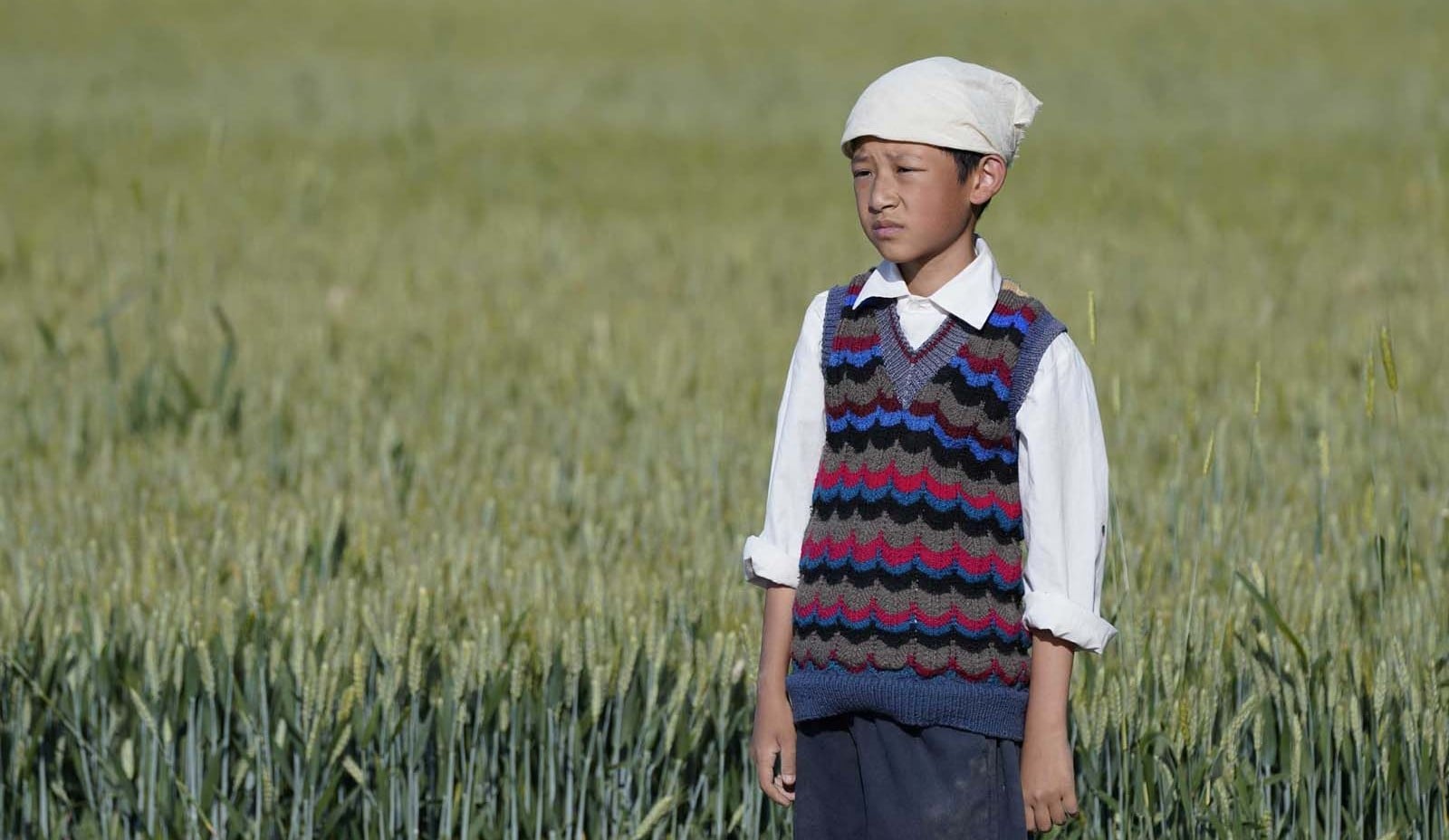
Huo Meng’s third feature film is one of those films where one doubts whether the statement of what it tells is likely to make spectators rush. Its great beauty, its moving power, however, are very much linked to this story, but they depend entirely on the way in which it is staged.
A vast fresco inscribed in the Chinese countryside, which was still very little developed at the beginning of the 1990s, it was filmed over an entire year to describe the daily life of a village at a time when economic reforms are disrupting ancestral ways of life, both what was oppressive and what was warm and necessary for survival.
Observed and experienced by Chuang, a 10-year-old boy who comes to live with his peasant grandparents while his parents work in the city, the multiple adventures of his daily life acquire an intensity, a brutality, a splendor, a gentleness each time unique.

Joint work and traditions, physical effort and contact with nature are all new experiences for Chuang (Wang Shang). | ARP Selection
Alternating very close-ups and immense views of nature worked tirelessly, Me Timessons
little by little arouses a very concrete sensation of the conditions of existence, as cinema has rarely given access to, while breathing life and flesh into multiple characters who continue to gain in autonomous presence.
The film, which was one of the highlights of the last Berlin Film Festival, where it received a very legitimate Silver Bear, generates an impressive effect of immersion, in a paradoxical way. Paradoxical in that, far from making us forget the realities of the world, it provides access to them in a sensitive way.
Chinese “Georgics”
Relationships to time, rhythms, space – the immense plain, the cramped and uncomfortable habitats –, to beliefs, to forms of hierarchy and solidarity, become perceptible thanks to the powers of image and sound.
It is obviously not at all a question of pretending to be a Chinese peasant at a time of accelerated modernization of the economy which is disintegrating an ancestral way of life. It is a matter, in a way that does not involve any form of discourse, of making oneself accessible to the interweaving of a set of processes usually classified as “human”, “natural”, “private”, “collective” as a continuum that is simultaneously worked by desires, memories, political decisions taken far away, the coming of cold or rain, the return of immemorial ceremonials.

In the wake of this newcomer, the tractor, a cosmic and very concrete shift. | ARP Collection
The aspiration of a young woman for another way of life, the practice of rituals, the solitude, the fear and the curiosity of the city kid in this rural and family world which is only incompletely his, the arrival of agricultural machines, the local power games are all very different forces but which the production knows how to bring into play together.
Smoke in the distance in the fields, light variations, minute vibrations on a face, sound shrills to celebrate, seduce, protest or intimidate contribute to the deployment of these Georgics Chinese works which turn out to tell a story that is both very situated – historically, geographically, socially – and has a formidable power of echo beyond what appeared to be its setting or its subject.

Harvest time
de Huo Meng avec Wang Shang, Zhang Chuwen, Zhang Yanrong, Cao Lingzhi
Duration: 2h15
Released December 24, 2025

Hi! I’m Renato Lopes, an electric vehicle enthusiast and the creator of this blog dedicated to the future of clean, smart, and sustainable mobility. My mission is to share accurate information, honest reviews, and practical tips about electric cars—from new EV releases and battery innovations to charging solutions and green driving habits. Whether you’re an EV owner, a curious reader, or someone planning to make the switch, this space was made for you.


Post Comment