Vivaldi and the orphans of the Pietà at the cinema. Director Michieletto: «A Venetian pride»
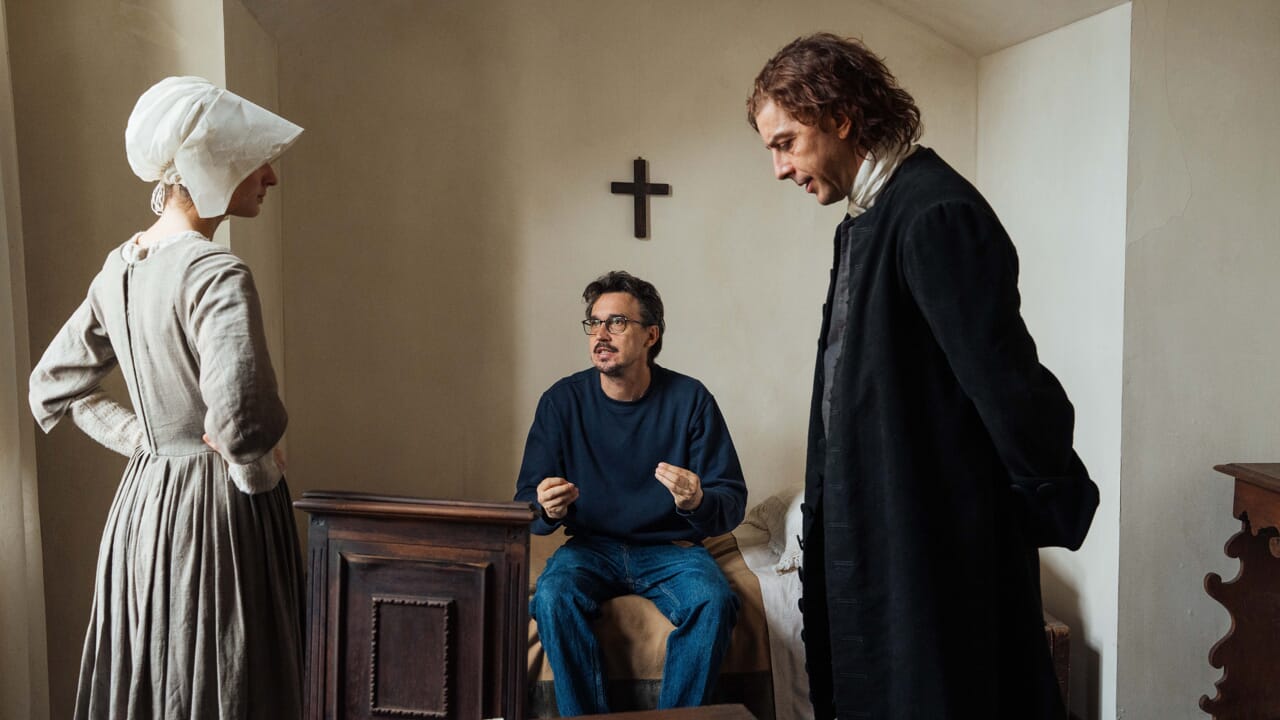
It’s in cinemas from today Primavera, the film with Michele Riondino, Tecla Insolia, Andrea Pennacchi and Fabrizia Sacchi (and with the participation of Valentina Bellè and Stefano Accorsi) which tells the story of an orphan from the Ospedale della Pietà in Venice, who in 1716 met a new violin teacher who changed her life: Antonio Vivaldi.
Click here to subscribe to the VeneziaToday WhatsApp channel
Produced by Warner Bros and Indigo Film, and based on the novel Mother was standing by Tiziano Scarpa, the film is directed by Damiano Michieletto, making his debut as a film director but already known for his theater directions, especially operas. Originally from Scorzè, he has worked in the most important theaters in Italy and beyond, he will be creative director of the opening ceremony of the Milan Cortina Olympics, but he has chosen Venice for his film, a context he knows well. We reached out to him for a few questions.
Can we say that you “chose” Venice for this, your first film?
Yes, when the idea of making a film was born, with the production that had appreciated my works at the Teatro dell’Opera in Rome, an interlocution began, I had brought several proposals, including this one. It’s not a coincidence.
What does this city represent for you?
A lot. I went to my first theater school here, at the Avogaria, I graduated on the San Sebastiano campus, I trained here and worked many times, at the Fenice, at the Goldoni. It is a city of reference for me, for my friends, it allowed me to feel like I was in a place that I know and have lived.
So far it has been appreciated by critics, but I ask you, why go and see this film?
Because it’s a good film, it won the audience award in Chicago, it was liked. I hope it’s a film that can make us proud of our history, of what the city has created, I was passionate about shooting it, studying to be able to write it, I hope the public is passionate about it in the same way.
You created a global story, the film was sold in many different countries. Is it also a Venetian story?
Very Venetian, 100%, it tells a little about what the Republic was. To solve a social problem, that of abandoned children, the Serenissima invented to educate them with music, to create an orchestra of the highest level. You can eat with culture, one might say, with that money they financed the orphanage. It makes us understand the courage, the imagination, the great Venetian pride. Regardless of the name of Vivaldi, who is a well-known name today despite not having been very lucky in life. They are our roots, which cannot be seen but are there, identity passes through here.
For you, the choice to focus on a story that had music at its center was not accidental…
No, it’s part of my job. I have always told stories with music, giving it a narrative value and not just an accompaniment, so I wanted to do it on the big screen.
In the film there is a lot of talk about money, contracts, is this also a reference to current events?
I wouldn’t say, reading Goldoni’s comedies, there isn’t one that doesn’t talk about money. There was an economy that concerned families, businesses, merchants. In the film there is a perspective, that of the great power, in the background of the film there is a war, which cannot be seen but is there. The economy is a characteristic of all the great cities that have made history. Ingenuity is a characteristic of the Venetians, as is audacity, I would say. Art produces economy. Today Venice is a city that lives above all from tourism, but in my opinion the important thing is to give tourists quality and creativity, but I get angry when I see a city that sells itself.
The Pietà Institute still exists, but today houses a hotel. You weren’t able to shoot there, but did you keep in touch?
Of course, they have a museum, in which we studied, they have musical instruments, they told us the history of the Institute. Unfortunately the church was heavily remodeled in the 19th century, and little remains of the 18th century interior. But we also worked in another Venetian context, the Ospedaletto complex, in Barbaria de le Tole, an orchestra played there and the grates, the choir loft, the furnishings are still there. We were inspired to rebuild the Pietà church of the time.
A film between historical truth and fantasy?
This is what I loved about Scarpa’s novel, starting from a historical fact, Vivaldi teaching the education of orphans at the Pietà orphanage, to build a fantastic story, from the imaginary meeting of these two souls. And based on that story we have built a new story with cinematic characteristics, a sort of fairy tale, with music at the centre.
From today 25 December “Primavera” is in all Italian cinemas


Hi! I’m Renato Lopes, an electric vehicle enthusiast and the creator of this blog dedicated to the future of clean, smart, and sustainable mobility. My mission is to share accurate information, honest reviews, and practical tips about electric cars—from new EV releases and battery innovations to charging solutions and green driving habits. Whether you’re an EV owner, a curious reader, or someone planning to make the switch, this space was made for you.



Post Comment