Santiago Esteves and “The Revenants”, how to fake death | The film premieres on Thursday the 23rd
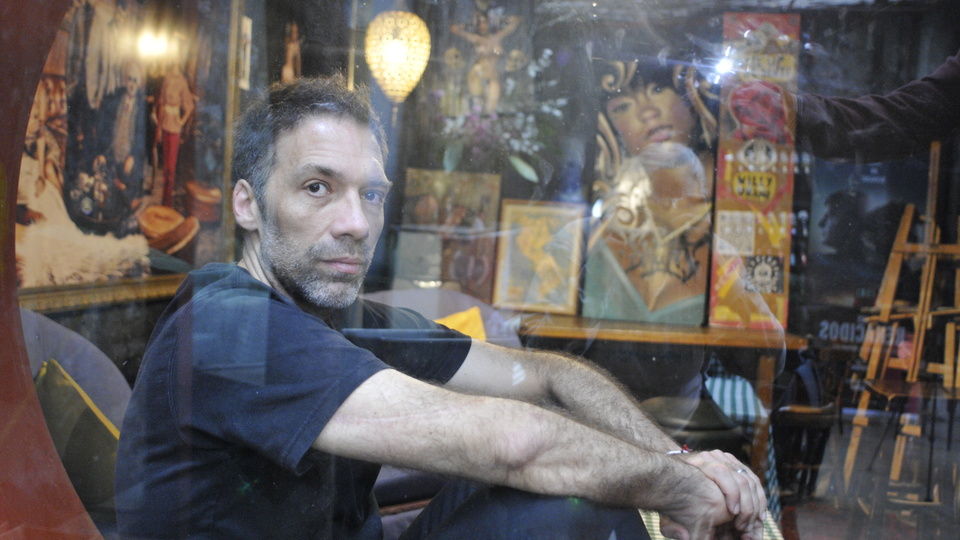
Ten years ago, the filmmaker and psychologist Santiago Esteves, director of The education of the Kinghe really wanted to become a police officer in Mendoza, the province where he was born. One morning, on a radio clock he had, when he got up he heard a program in which they were interviewing a man who worked in a funeral home. They asked him about everything that has to do with urban myths of that profession: if someone had woken up at a wake. Or what would have to be done to pretend to be dead. At that moment, Esteves “lighted a lamp.” And he said: “This could be interesting for a police officer. Not people who work with weapons, but someone who provides a specific service for people who need escape from Justice, from debts, of whatever.”
This is how it was born The reborn, second feature film by Esteves, which tells the story of two feuding brothers and a dark business: helping people fake your own death and then cross them across the border between Mendoza and Chile. This is a complex operation that will put their lives in danger and force them to define the fate of the family inheritance. The film opens in theaters this Thursday the 23rd.
-What did you find when researching the scientific methodology to pass a person off as dead?
-I relied a lot on my brother, who is a surgeon. And so all the time the question was What substances serve to stop breathing, For example. What’s more, in fact, at one point, he got scared because he thought I was asking him about a personal case or someone close to him. For example, how to make someone “revive” after being in a semi-lethargic state, a state of very low pressure, how to raise it. I told him it was for a movie. And he told me: “No, no, no, tell me the truth, everything is fine. I’m not going to get angry.” There was this thing boundary between reality and fiction that intersected in those calls, but ultimately the question was which substances produce what and what medical use each thing has. So, along with that, a kind of credible doctor, approximate because complete stopping of the pulse is impossible. In the film they put together some cocktails that could work, in some way.
-In Western culture, and especially in the Catholic religion, the passage from life to death is felt as something sacred. What was it like to put this in tension with the story you had in your head?
-There were some things that moved me to insist on this. Was a difficult script because I had to build a precise plausibility and not be left alone in this. It had to do with something that resonated with me, in that sense. There was something in between sacrílego in business, in trading this half-sacred thing of rituals. And more so in the province of Mendoza, which is a strongly catholic province and where I grew up surrounded by symbols. There was something sacrilegious, heretical about playing with this possibility of trading, which is the opposite of sacralizing. There was something of that that was always at play and that was a driving force to sustain. In fact, there were scenes like an exhumation that I found very interesting, this idea of whether there is someone alive inside very moving. Somehow, with this idea of the staging and that all those rituals are also rituals, I thought what would happen if the staging lacked substance, core, essence. And that was fun because it also made it very cinematic: the idea that there is something that we are all seeing, but what is happening is something else.
-How was that work to excite the viewer and turn something as real and true as a wake and a funeral into a lie?
-That was the most fun to do, in terms of the script and then in the staging: as if the montage was building that illusion, without ever being explicit. The film takes a path perhaps a little more complex than simply telling in the first five minutes what the characters do. The idea was to set up this operation in front of the viewer’s eyes. And the viewer is the one who generates the expectation of what is happening behind those events that he is seeing, from the side of the characters who carry it out.
-Since you are talking about the characters, how much of your training as a psychologist helped you to create the behavior of the characters?
-There was an issue in the film: more than with psychologically identifiable roles it had to do with a kind of idea about the family as a technology for raising people, about how the roles are distributed or how the roles and talents could have been distributed between these two brothers, in such a way that one would have received knowledge and the other would not. And, in some ways, how they dealt with that in life. There was something more archetypal than purely psychological. I got away from that a little bit.
-Why did you think it was important to choose the Mendoza border with Chile for the story and not another border?
-First, it is a border that moves me a lot. Since I was a child, I approached the limit or crossed to Chile because the people of Mendoza, unlike the other Argentines, The sea that is closest to us is on the other side. Many times to go to the sea you had to first cross the Cordillera. It is a very special border. First because of the height, because it is from 2 thousand or 3 thousand meters. And because it is a middle border impassable. You can only cross it through the route. That is, there are other means such as riding a horse, but they are very difficult, or walking, but it is not like other borders where trafficking or trade is easier. What separates one country from another is a position. On the other hand, here what separates one country from another is a mountain range of tremendous height. And the fact that it is a single road where you can cross it made it very interesting for this police officer. That all the characters had to stick to the route to cross it. and the visual splendor It has something very powerful, and also a great challenge to film.
-There are doctors in your family and the film takes into account medicine and the use of substances in a way that is far from ethical. How did real life influence fiction?
-There are no cases or I could never say if there were, but there is some understand the body like a series of functions that can be turned on or off, which I think was very influential when writing the script. It’s a bit what doctors do: understand the body as a series of functionings, rather than with all the humanity or spiritual trait that one usually adds to human life. It was like saying: “If these characters are going to work they have to have a very high level of coldness to be able to do what they do, turning body functions on and off.” And that is something that I have seen in my family: it ends up being something necessary and positive that someone can work with that coldness in certain aspects. Therefore, I think there was something of that, like that kind of knowing that side where there is someone who is playing the strings and has to do it in a very cold way.

Hi! I’m Renato Lopes, an electric vehicle enthusiast and the creator of this blog dedicated to the future of clean, smart, and sustainable mobility. My mission is to share accurate information, honest reviews, and practical tips about electric cars—from new EV releases and battery innovations to charging solutions and green driving habits. Whether you’re an EV owner, a curious reader, or someone planning to make the switch, this space was made for you.


Post Comment