Half a century after his death, Herzog’s legacy is preserved in film and AI
Exactly 50 years ago, journalist Vladimir Herzog, known as Vlado, voluntarily presented himself to the Department of Information Operations – Internal Defense Operations Center (DOI-Codi), a repressive body of the military dictatorship subordinate to the Army, where he was arrested without a court order. Hours later, after being interrogated under torture, he was killed by the Brazilian State, on October 25, 1975. The murder of the then director of Journalism at TV Cultura was a milestone that generated great mobilization against repression and also the fight for democracy.
Five decades after its execution, new productions contribute to the preservation of Vlado’s legacyincluding the documentary release and podcast about your lifein addition to a tool that uses artificial intelligence (AI) to simulate responses in Vlado’s voicebased on a collection of the journalist’s productions.
The documentary Vlado’s Life – 50 years of the Herzog Caseproduced by TV Cultura, will air on the channel, this Saturday (25), from 11pm. The production, which features unpublished materials, tells the story of the Herzog family and Vlado’s life until his death, in addition to showing the journalist’s legacy, which is preserved by the Vladimir Herzog Institute (IVH).
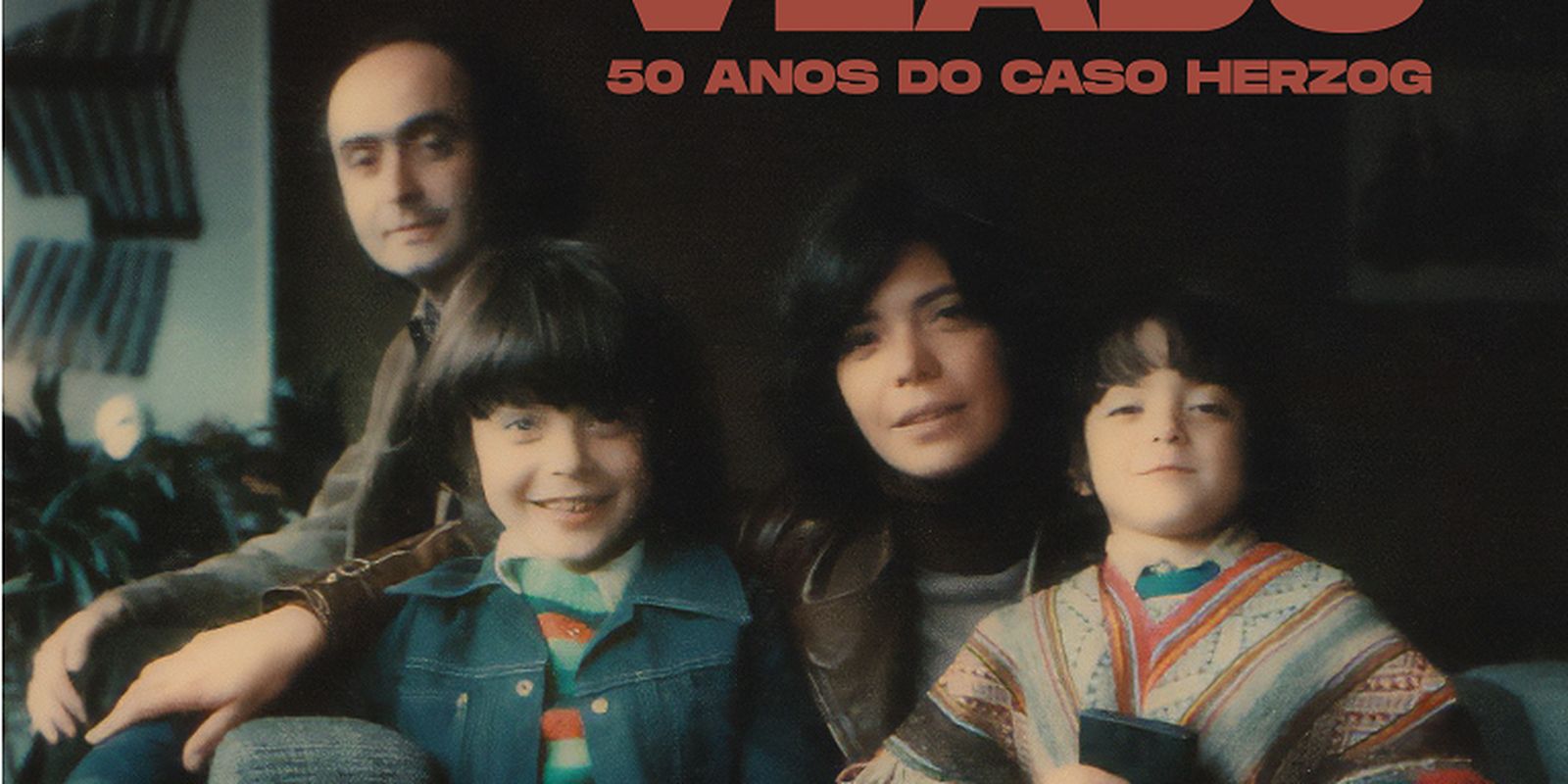
The official launch took place this Friday (24), at the 49th International Film Festival in São Paulo. The poster made especially for the event has a never-before-seen photo of Vlado, alongside his wife and two children, taken days before his death.
Director of Journalism at TV Cultura, Marília Assef said that the film features never-before-seen photos and documents, as well as interviews with people who worked and lived with Vlado. “The archive used was vast, here from TV Cultura and the institute. There are a lot of photos that the Vladimir Herzog Institute has received lately, slides of the film he was making about Canudos. He had slides unpublished works by Vlado, which have now been recovered by the institute”, he says.
“The importance (of the film) is to tell Vlado’s story, that’s why the documentary has that name. We tell you what he liked to do, who he was, his importance as a person, as a journalist, his wishes and desires.”
The director recalls the journalist’s relevance to the country’s history, assessing that his murder had a great impact on the democratic transition post-military dictatorship.
The documentary also rescues rare films recorded during the ecumenical service at the Sé Cathedral, on October 31, 1975, and at the unveiling of Herzog’s tomb, at the Israelite cemetery in Butantã, a year after his death.
This Sunday (26), the Vladimir Herzog Memorial Squarein the center of São Paulo, will receive a permanent intervention called Calçadão do Reconhecimento. On the floor, there will be installation of the names of all the people and collectives that won the Vladimir Herzog Journalistic Award for Amnesty and Human Rightsone of the most important in the country.
One of the tributes will be to all the workers at Empresa Brasil de Comunicação (EBC), who received, in 2022, the Special Vladimir Herzog Contribution to Journalism Award, for their resistance in defending public communication. The recognition resulted from the professionals’ performance during Jair Bolsonaro’s government, when censorship, governmentism and persecution were widespread in the company.
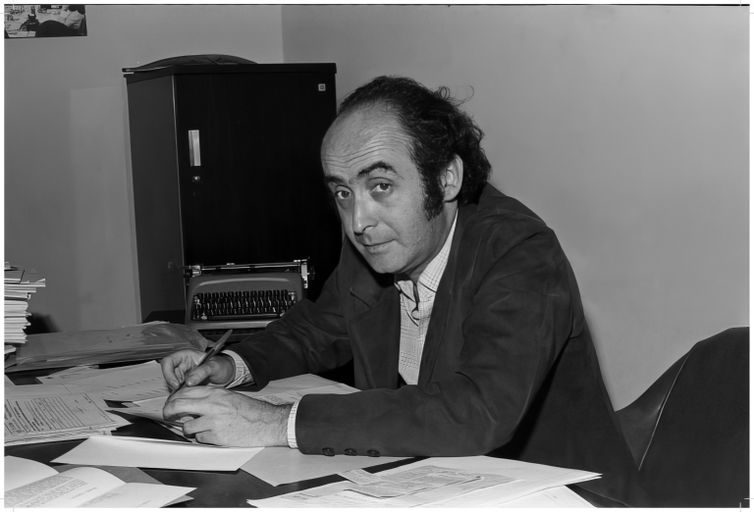
Vladimir Herzog’s murder generated great mobilization against repression and also the fight for democracy – Photo: Wilson Ribeiro/Vladimir Herzog Collection
A photo and a farce
No podcast Or Herzog Case: A Photo and a Farcejournalist Camilo Vannuchi interviews photographer Silvaldo Leong, who took the image of Vlado’s body hanging in DOI-Codi. The production also includes interviews, documents and unpublished audios, as well as analyzes that contextualize the Brazil of the dictatorship and its brands in the current context, and is available on streaming platforms. streaming.
“The photo is a hoax, a very violent hoax, because it simulated a suicide with Herzog hanging from a window with the supposed cloth belt that would be part of the uniform of the prisoners in the DOI-Codi prison, but in the prison there was no belt, not made of cloth or any other material, no one wore a belt”, reports Camilo Vannuchi.
Furthermore, Vlado was taller than the window from which he was hung, with his knees bent and his feet dragging on the floor. “It’s an inconceivable situation, according to the experts, the doctors, you can’t kill yourself by hanging from a height lower than yourself.”
As Vlado was Jewish, in the event of suicide – as the official version at the time said – he should be buried in a specific location, in accordance with religious tradition. However, in the process of preparing the body, says Camilo, an employee sought out Rabbi Henry Sobel to report that there were bruises and abrasions on the body. “He says this on the phone, and Henry Sobel says ‘no, he didn’t kill himself, let’s bury him in the noble area’”, says Vannuchi.
Journalist Paulo Markun, a friend of Vlado, who was also imprisoned at DOI-Codi on the date of his death, reports that There was even an investigation to mask the murder. “All of this was a farce and fiction, we tried to argue but they (DOI-Codi agents) insisted that he had killed himself,” he says, who was also a colleague of Herzog at TV Cultura.
Markun remembers that it was “24 hours a day listening to screams of people being beaten” in the place. “When (I was taken), I arrived at a place that was a torture center. It wasn’t a police station, there wasn’t a clerk, nothing like that. It was violence from the beginning.” He emphasizes that all the detainees wore overalls without belts, which helps to deny the suicide hoax, using a belt, created by the military.
Artificial intelligence
In your professional role, Markun developed a tool, using artificial intelligence, that creates responses from materials produced by Herzog throughout his life. “It’s a set of books, reports, texts by Vlado, letters he wrote, organized in a knowledge base, to which artificial intelligence responds with Vlado’s voice”, he explains.
When the user asks a question to the avatar built from Herzog’s cloned voice, the platform searches the knowledge base using keywords, and the artificial intelligence constructs the text response, which is instantly transformed into audio. The tool will be presented at an event that will discuss how artificial intelligence can serve to preserve memory, on the 30th and 31st of this month, at the Sesc-SP Research and Training Center.
For Markun, this is yet another way to present Herzog’s story, through a new format.
“It is a cloned voice of Vlado based on the small excerpt (of the original voice) that is available, and allows this avatar to answer any question about him, about his trajectory and career, biography, projects, texts and political scenario, until the morning of October 25, 1975, when he appears at DOI-Codi”, he highlights.
The journalist assesses that the initiatives surrounding the commemoration of the 50th anniversary of Vlado’s death are a demonstration that, even among different political positions and beliefs, there is a common understanding that some premises must be ensured. “The first of them is respect for the popular vote. The second, combined with this, is that human rights are fundamental. The third is that freedom of expression is essential”, he lists.
“What led to the defeat of the dictatorship was the understanding that people who think differently can unite around this idea that democracy is important and that dictatorship is unacceptable”, he recalls, citing the inter-religious act that took place seven days after Herzog’s murder and which will be repeated this Saturday (25), at 7pm, at the Sé Cathedral.
Democratic Front
On October 31, 1975, more than 8 thousand people gathered at the Cathedral for an event in honor of Herzog, led by religious leaders such as Cardinal Dom Paulo Evaristo Arns, Rabbi Henry Sobel and Reverend Jaime Wright, with the support of journalist Audálio Dantas, then president of the São Paulo Journalists Union. The event became a symbol of democratic resistance.
According to Paulo Markun, at the time, a broad front was also formed in the political sphere. “In that first demonstration and over time, something was built that had already been designed in the 1974 election, which was the creation of a great democratic front, in which the left, the communists participated, and other groups were approaching.”
“Tancredo Neves, Ulysses Guimarães, Thales Ramalho and Pedro Simon, names that have nothing to do with the left, (united around the) idea that it was necessary to defeat the dictatorship and that this defeat would be achieved through the participation of a broad mass of the Brazilian population. This led to the Diretas campaign in 1984 and the election of Tancredo Neves”, says the journalist about the movement towards redemocratization.

Hi! I’m Renato Lopes, an electric vehicle enthusiast and the creator of this blog dedicated to the future of clean, smart, and sustainable mobility. My mission is to share accurate information, honest reviews, and practical tips about electric cars—from new EV releases and battery innovations to charging solutions and green driving habits. Whether you’re an EV owner, a curious reader, or someone planning to make the switch, this space was made for you.


Post Comment