Diego Gottheil: “Today more than ever, love is revolutionary” | His debut film “The Wound” premieres on Thursday the 6th
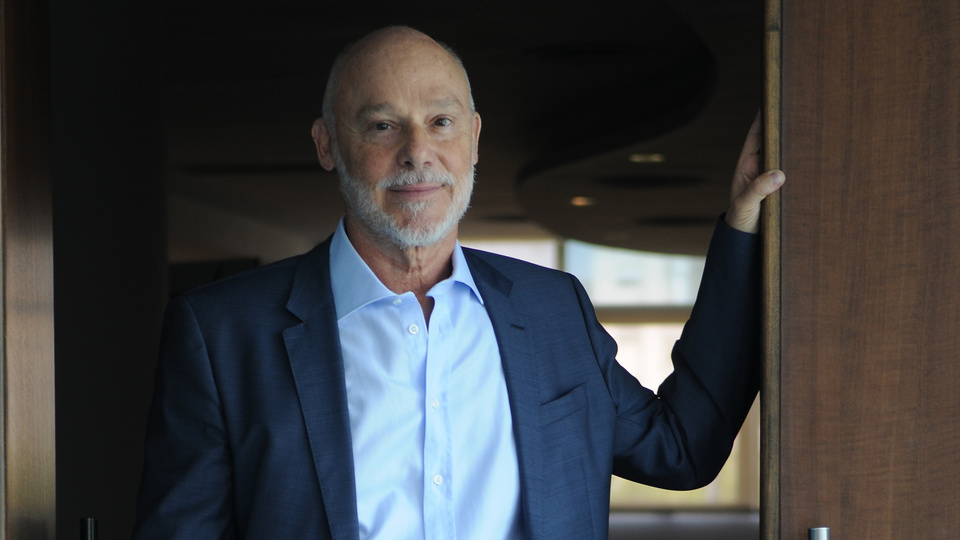
From every love I had I have wounds, says the tango. But some, it might be added, are deeper. The Diego Gottheil’s debut film, The woundtells an individual but totally universal story that runs on the notion that everyone had a great love, someone who is kept inside and that, without warning, something in the present can activate. The film, selected at BAFICI 2024tells the story of Raúl, a successful 62-year-old lawyer who receives a call with tragic news from his childhood love. That unexpected revelation leads him to relive that story, traveled with the passion, tenderness and melancholy that time imprints, and he remembers a bond marked by context and history. The wound opens this Thursday the 6th in theaters.
The idea was born in a time after 1980 and Gottheil wrote the script in 1988. “It stayed there and I continued writing other things, other scripts, I even published a couple of novels. The script was stored there until a producer friend read it and thought it was a good story to film,” says the filmmaker in dialogue with Page/12. “It was a possible story to film from a budgetary point of view and the truth is that I am very happy with the result,” he adds.
-How was the work to tell a love story in a climate of terror?
-What happens is that I am old enough to have lived that story. In 1980, I was 19, like the protagonist Raúl, so I know the era well. Everything that appears in the film are things that I saw, that I knew, especially those that had to do with daily life in society. All the situations that are seen in the film, linked to what I call “the night of the dictatorship”, and that permeated family life, daily life, are in the film, I understand, and I know them directly from having lived them, closer or further away. But none of what you see in the film, as far as it has to do with the era, is something that I imagined but rather that I saw it.
-In some way, the dictatorship is there as a context, but it gives the impression that you tried to show how everyday life influenced people.
-Yes, the dictatorship is the backdrop, it is not the theme of the film. Only this painful love story takes place right at that time. And what was interesting about telling it, beyond the story of Raúl’s passion and love for Marcela, was doing it in that context. A story like the one told in the film today would be completely different and perhaps the oppressive elements would have nothing to do with those that appear in the film. They would be very different.
-Does the character’s revolutionary sense make you feel love as another ideal, as a revolutionary love?
-I think that love is revolutionary, today more than ever, really. Love, which is what I wanted to reflect in the film, passion, I wouldn’t say that he takes it as an ideal, but rather it is something that goes through this kid. And he lives, he is madly in love, and he plays right or wrong for that love he feels. And try to build from that love. The film tries to narrate the times when love makes you believe, through illusion, that you can build a world and, suddenly, things that happen can knock down your house of cards. Raúl is a character who expresses his need to love, he loves the character of Marcela and all the condiments that are seen around him, which evoke a certain resistance to oppression, such as the posters he has in his room, or the debate he has with his father or with the professor at the university, show that it is not an organized ideology but rather a rebellion against what he considers unfair.
-Does such a passionate love union have a correlation with disaffection in the families of both characters? There is like a question of family detachment. And perhaps this passionate union is a consequence of the lack of affection between the families of the two characters.
-Yes, this girl and this boy are very alone. It has to do with this detachment, with that loneliness they feel in their own homes, to begin with. There is very little they have outside. So, this loneliness also unites them a little, beyond affection, beyond love. It’s a movie about two lonely beings.
-In relation to the above,The wound Is it also a film about lack of communication?
-It is a film about lack of communication as the characters try to communicate, as best they can, what is happening to them, what they feel. Note that Marcela is a character who is suffering a very dramatic situation. Try to resolve it yourself by going to a doctor, etc. Finally, she ends up going to see Raúl, who loves her. But she has a hard time communicating what is happening to her. He can’t tell his mother about the problem he has, he has no one around. And the same thing happens in his case. He has a slightly more well-off family who, suddenly, goes on a trip and leaves him. And he remains alone.
-How much of this lack of communication can be related to the climate of silencing that the dictatorship imposed?
-Largely. It is not necessarily a direct derivation of a regime, but it could be. It was an authoritarian, bloody regime, and without a doubt that reflected in interpersonal relationships: in the family, among friends. So, I think the observation is correct. In the dictatorship you lived in fear. Sometimes it is difficult for someone who did not live through the time to understand the terror that was experienced. I talk to young people and they say, “Was it that terrible?” And if. You went out into the street, you had forgotten the document and you panicked.
-You also show the differences between generations in the way they understand life and relationships. Do you think that, in that sense, young people can identify with this story of youthful love and not only those who lived in a dictatorship?
-Absolutely. Young people always have the seed of love and rebellion, of wanting to break with the the state in which. And the truth is that the the state in which At that time it was extremely closed off, it was very dangerous. But today’s young people, perhaps locked in other paradigms, always try to break and break free on the side of love and passion. The film has to do with freedom, even when that search is done as hard as they can. Young people have this thing of seeking freedom no matter what.

Hi! I’m Renato Lopes, an electric vehicle enthusiast and the creator of this blog dedicated to the future of clean, smart, and sustainable mobility. My mission is to share accurate information, honest reviews, and practical tips about electric cars—from new EV releases and battery innovations to charging solutions and green driving habits. Whether you’re an EV owner, a curious reader, or someone planning to make the switch, this space was made for you.


Post Comment