A House of Dynamite: the quiet desperation of Kathryn Bigelow

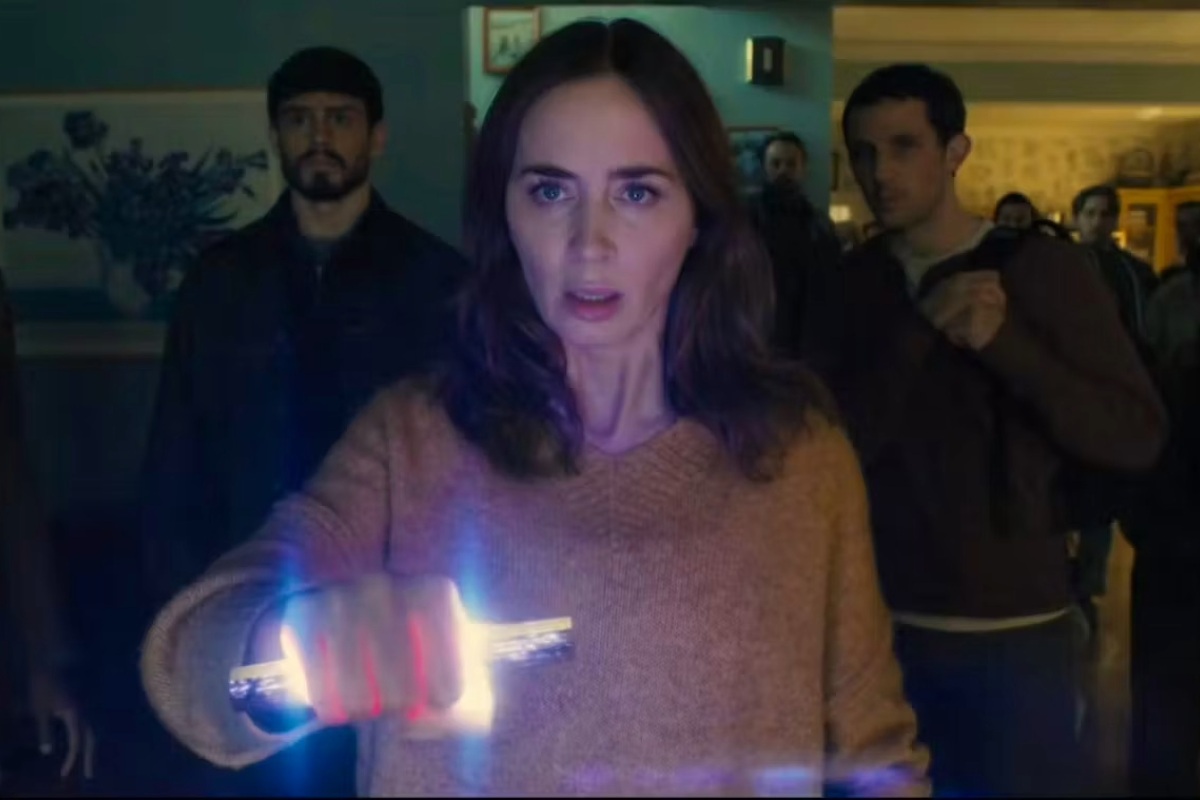
It seems like another normal day at the White House. The office workers who work at the center of power in the United States arrive early to their offices. They go for a coffee, pass the security points, leave their cell phone locked in a box, and enter a space full of screens. It is about the Situation Room of the White House, one of the many instances within the North American state whose function is to protect the nation, monitor external threats, and monitor 24 hours a day, seven days a week.
Suddenly a screen flashes: one of the hundreds (thousands?) of satellites that monitor the planet detects the launch of a missile whose trajectory would pass through US soil. There is surprise, but no alarm. The protocols are followed, everything is calm. Apparently this is not the first time this has happened, it could be a military exercise, a mistake, anything. “Wake me up if the world is going to end.”
But in a minute, the ordinary becomes extraordinary. The trajectory indicates that the missile will fall on North American soil in no more than 20 minutes, and that it is most likely a nuclear warhead. It is time to make decisions, to bring together (even if by videoconference) the security cabinet, the army and of course, the President of the United States, in whose hands is the responsibility of giving the order to wait or counterattack.
In A House of Dynamitethe Oscar winner (The Hurt Locker2008) Kathryn Bigelow, proposes a scenario that we would like to be unlikely, but that the evidence of the current state of humanity makes it absolutely possible. Without going any further, and to document the pessimism, the famous Doomsday Clock It is currently 89 seconds from midnight.
An epigraph at the beginning of the film puts us in context: at the end of the Cold War, countries welcomed the beginning of getting rid of their atomic weapons. “That,” Bigelow says, “was over a long time ago.”
Thus, there are only 20 minutes left to resolve, to execute protocols, to launch counterattack missiles, to “stop one bullet with another,” to wait for orders, to decide who shoots next. It is absurd, it is crazy, it is the tension over the fate of an entire planet, concentrated on the screens, on the buttons, and on the phones of a handful of men and women who, deep down, would not want to have that responsibility.
Everything happens quickly. Bigelow allows no respite. With an excellent rhythm and more than accurate editing (camera by Barry Ackroyd, editing by Kirk Baxter) the film immediately spreads that feeling of danger, of anguish, of embarrassment, in a gripping procedural thriller whose best moments are those where silence takes over the room and the gazes cling in silent desperation.
It is not the first time that we see a similar exercise (not to go any further, see September 5, 2024), but what heightens the tension is how close the setting is to the film. I don’t know if the reaction of the United States government to a similar crisis is as seen in the film, but the brio with which Bigelow films his film immediately convinces me: not only of the correctness of his outline of how the government would handle this crisis, but also of the anguish it causes.
When the famous 20 minutes pass before the first impact, the film returns to the beginning, and tells us the same story but from other points of view, with other officials, with the military, and finally (in a third fragment) with the president of the United States who (just as happened with the attacks on the Twin Towers) the emergency catches him while he lives with children in some kind of basic education. The trick, although anticlimactic, only increases the tension more and more.
The film has traces of disaster cinema (an ensemble cast, personal stories, tragedy), and other paranoid films such as Fail Safe (Lumet, 1964). Of course, it is impossible not to remember the seminal tape on these topics: Dr. Strangelove (Kubrick 1964). But Bigelow manages to make a personal and unique film.
At every step, the director shows her game: this is not a film about geopolitics, it is not a disaster film, nor is it a film about the end of the world. A House of Dynamite is a film that exposes with tragic dynamism the absurdity not only of war, but of life itself on a planet plagued by nuclear weapons and enough hatred to make someone push the buttons.
Bigelow shows us the insane absurdity of all this, as well as the illusion of protection that the United States government sells them (us). Because no matter the millions of dollars in defense, in rockets, in satellites, in agencies, in airplanes… when someone presses the button it will not be many minutes before the end. And the worst thing: we, the ordinary citizens, are not even going to find out.
Pessimistic, Bigelow warns that it is only a matter of time before the scenario happens, and when it does, we will not live to tell about it.
A House of Dynamite can be seen on Netflix

Hi! I’m Renato Lopes, an electric vehicle enthusiast and the creator of this blog dedicated to the future of clean, smart, and sustainable mobility. My mission is to share accurate information, honest reviews, and practical tips about electric cars—from new EV releases and battery innovations to charging solutions and green driving habits. Whether you’re an EV owner, a curious reader, or someone planning to make the switch, this space was made for you.


Post Comment