Abuse of power and mental health: what “27 Nights” reveals about judicial confinements
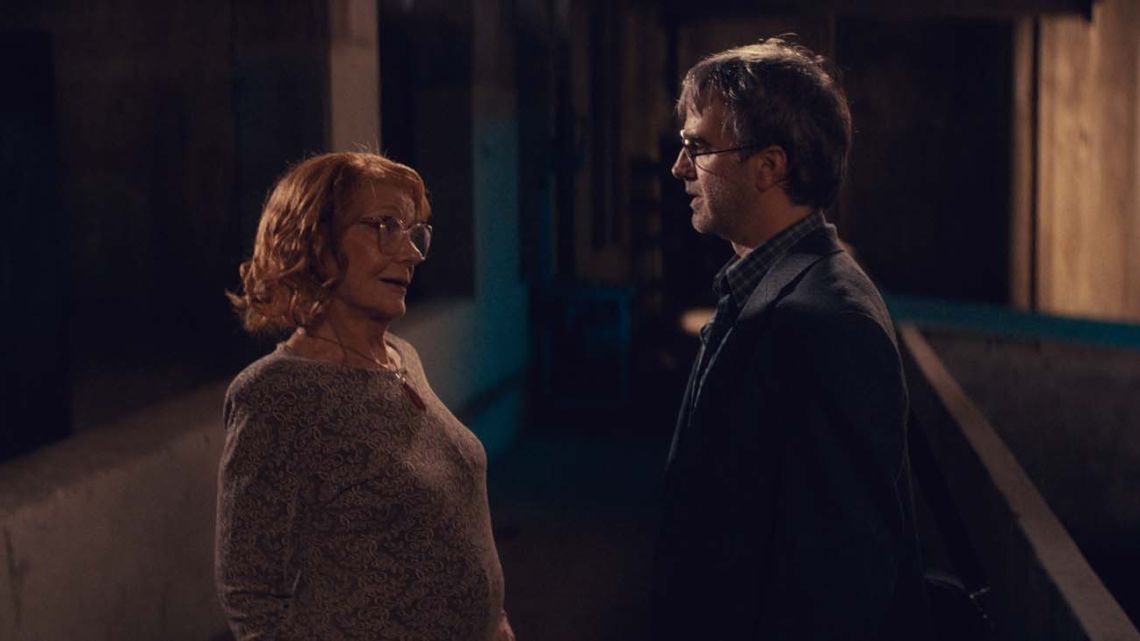
The premiere of the film 27 Nights, directed by Daniel Hendler and masterfully performed by the actress Marilu Marini and Hendler himself, as co-star, put on the debate table a social problem about which little is said, but it is known that it occurs more than usual. And it is the one that has to do with the decision made by children or direct relatives (siblings, nephews, cousins) to admit the elderly members of the family to nursing homes or neuropsychiatric institutions without their consent, citing, of course, mental health issues or to manage or manage themselves.
These are, in short, situations that put both the health system and the judicial system and society itself in check, in which it is questioned whether the elderly have desires, economic independence or emotional life. Those who promote this type of judicial confinement hide, in some cases, interests – mostly economic – that clash directly with the desire for freedom of the “patient” himself who is declared incapable.
As is known, Hendler’s film is based on a real-life case that occurred in 2005. The protagonist of that story is Natalia Kohen, plastic artist and patron Argentina, who was judicially committed against her will after receiving a presumptive diagnosis of frontotemporal dementia. Years later, it was proven that this diagnosis lacked scientific basis. As will be remembered, the controversial matter also involved a renowned neurologist.
Authoritarians don’t like this
The practice of professional and critical journalism is a fundamental pillar of democracy. That is why it bothers those who believe they are the owners of the truth.
Natalia Kohen died in 2022 at age 103, at the time of death no He had cognitive impairment and lived lucidly until the last day of his life.
The book of Hendler’s film was based, in turn, on the non-fiction novel of the same name written by the psychoanalyst and writer Natalia Zito. The case was also covered in the documentary “I, Natalia”, by Guillermina Pico, made in 2009.
But beyond this specific case, other facts with similar characteristics were also known that also came to public opinion. One of them occurred in 2016, and featured the plastic artist Nicolás García Uriburu. His sisters presented a medical report in which the brilliant artist was diagnosed with frontotemporal dementia in the National Civil Court No. 77. This is how the judge Gladys Adriana Carminatti ruled that García Uriburu could not dispose of his assets – bank accounts and his work for example – nor could he leave the country without judicial authorization and if he obtained it, he would have to do so accompanied by a person in charge. García Uriburu died in June 2016
Further back in time, this week the case of the historic radio host and ENTEL was known, Marita Monteleonewho reported that her daughter wants put her in a nursing home and dispose of their assets (see separate).
What the experts say
“Although with age we are more likely to lose cognitive functions, it must also be said that this is not always the case. Longevity is not synonymous with deterioration,” he stated. Mirta Goldsteindoctor in Psychology and president of the Argentine Psychoanalytic Association (APA). “When a person loses his abilities, he realizes and suffers. It is very painful to stop existing as a useful person. This obviously causes suffering and helplessness in family members. To this we must add that there are functional families and there are dysfunctional ones because parental and filial love cannot repair everything,” he added.

Later in his talk with PROFILEGoldstein maintained that “there are cases in which the anguish between generations, which is anguish due to generational change, is very strong and leads to the emergence of symptoms, frustration and even abuse. If we take into account that there is no family that does not go through this anguish, which is ultimately anguish in the face of sexuality and finitude, then we better understand that it occurs in both parents and children. That is, not all Families go through and deal with intergenerational grief in the same way and with less suffering.”
For the owner of APA, This film “shows the intolerance of daughters before sexualitythe freedom and the unique elaboration of his mother’s death. Treating her as sick and wanting to manage her assets are ways of control anxiety that awakens a mother who retains her desire to live and, mainly, to live according to her own desire.”
Regarding the role played by mental health professionals, Goldstein stated: “There is no doubt that these daughters find professionals willing to ally themselves with such symptomatic behavior.
We professionals who see the psychological pain of both parties find, like the psychologist in the film, mediations between the anguish of the elderly and the anguish of the children. The best thing that can happen to children is to have a space where the life and finiteness of the parents and aging itself hurt, since each generation succeeds the previous one and gives way to the subsequent one. This is the life of human beings, so when faced with the ephemeral, the transitory and the mortal, we react as we can and we do not always do so without harming others. Some long-lived people maintain their emotional and intellectual strength and others become more vulnerable and dependent. Family affection makes a difference.
For its part, Sara Zusman of Arbiserdoctor psychoanalystalso a member of the APA, assured this newspaper that “the current mental health law prevents mandatory psychiatric hospitalizations without consent, except in cases of severe psychosis or obvious risk.”
Regarding the appreciation of old age, Zusman assured that “in Japan, the elderly are valued as a source of wisdom and experience; there are even programs that link them with children to promote mutual learning. On the other hand, in the West, there is a tendency to devalue old age and ‘get rid of’ older people, considering them unproductive or a burden,” he concluded.
Of capabilities and rights
From a legal point of view, Juan Bautista Torres López, lawyer specializing in Health Lawassured this newspaper that “(legal) capacity is the general rule, since all people are capable before the law. The restriction of this capacity is an exception that requires a specific civil judicial process, different from other actions such as health protections.”
Later in the interview, Torres López indicated that “the judicial process to restrict the capacity of an adult does not imply a total annulment of their rights. It is aimed at establishing support or limiting capacity only for specific tasks or functions, always seeking to preserve the integrity of the person.”
Finally, the lawyer assured: “The main objective of these precautions is to prevent a third party (for example, a family member) from being able to hospitalize a person for health reasons (such as sending her to a nursing home) and then, covertly and improperly, dispose of her assets or make use of her assets, such as a home,” he concluded.
Marita Monteleone hospitalized: the judicial conflict with her daughter Malena de los Ríos
The historic broadcaster Marita Monteleone is going through a difficult personal and judicial moment. The renowned radio host and the legendary voice of ENTEL has been hospitalized for three months at the Centro Gallego Sanatorium in Buenos Aires, after surgery on her right knee, and reported that her daughter, Malena de los Ríos, seeks to declare her insane.
In dialogue with the program In the afternoon (América TV), hosted by Karina Mazzocco, Monteleone reported that, despite being medically discharged, he cannot leave the clinic without judicial authorization.
“Three months ago my knee got stuck and I am in the rehabilitation process. The doctors discharged me, but I need the authorization of a judge, and my daughter spoke to send me to a nursing home,” he said.
According to your testimonythe situation worsened when his daughter blocked all contact and made legal decisions about his assets.
“I can’t leave here if I don’t have the judge’s order and I can’t sell my apartment if she doesn’t sign. I asked her not to harm me, but took advantage my moment of health and now I am restricted,” explained the announcer.
Monteleone claimed to be in full use of her mental faculties and rejected the possibility of being transferred to a nursing home.
“I don’t agree, I don’t want to go. It’s a dagger, because the only daughter I have doesn’t want to see me. “I haven’t seen her in more than a year,” he lamented.
The announcer also stated that she has already undergone a psychological evaluation and that the professionals confirmed that she is fine.
“I’m not going to move from here until the judge rules. I don’t want the police to come looking for me or take me to a psychiatric hospital.”, he concluded.

Hi! I’m Renato Lopes, an electric vehicle enthusiast and the creator of this blog dedicated to the future of clean, smart, and sustainable mobility. My mission is to share accurate information, honest reviews, and practical tips about electric cars—from new EV releases and battery innovations to charging solutions and green driving habits. Whether you’re an EV owner, a curious reader, or someone planning to make the switch, this space was made for you.


Post Comment