Death toll rises to 121 in police raid against drug trafficking gang in Rio de Janeiro
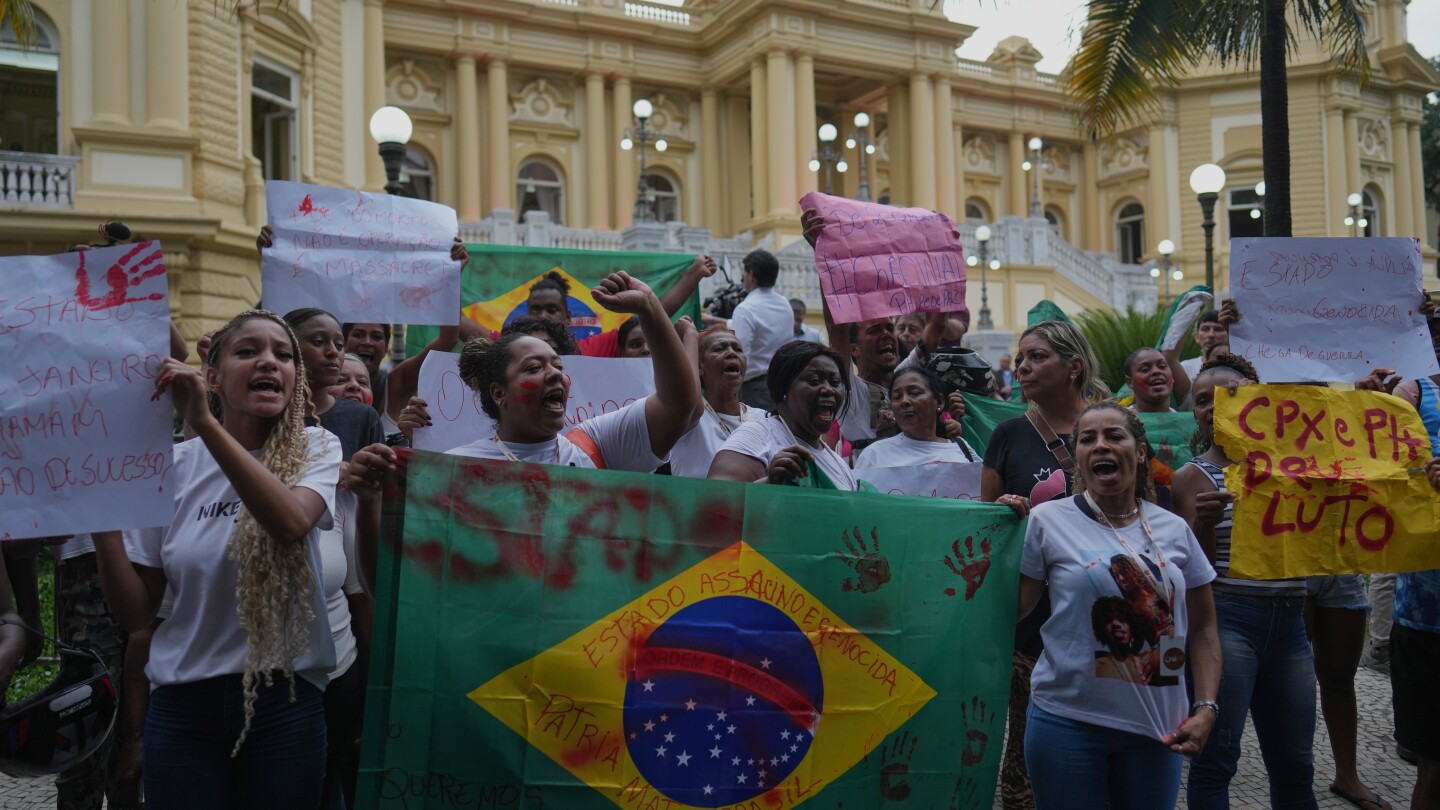
RIO DE JANEIRO (AP) — The death toll in a massive police raid targeting a drug gang in Rio de Janeiro has risen to at least 121 people, authorities reported Thursday.
The operation began on Tuesday in two of the city’s favelas, unleashing intense gunfights. An unknown number of people were injured. Among the dead were four police officers, according to officials.
The death toll rose from 119 to 121, but no further details were available on the two new deaths.
Human rights organizations have called for investigations into the deaths, describing the operation as one of the most violent in Brazil’s recent history.
Police stated that the raid followed a year-long investigation into the Comando Vermelho (Red) gang that controls drug trafficking and other illicit activities in the low-income communities of Complexo do Alemão and Penha. The group originated in Rio’s prison system and has expanded its influence in recent years.
During the operation, police arrested 113 people, seized 118 weapons and confiscated more than a ton of drugs, the force said.
The violence disrupted daily life in the affected neighborhoods. Schools closed, a local university canceled classes and buses were used to block roads.
Rio has long been the scene of deadly police raids. In March 2005, 29 people died in the Baixada Fluminense region, which borders Rio. In May 2021, 28 were killed in a raid in the Jacarezinho favela.
However, the scale of Tuesday’s operation was unprecedented. The action sparked protests and accusations of excessive use of force and calls for the resignation of Rio’s governor.
On Thursday morning, community leaders in Penha gathered at the headquarters of human rights group CUFA to prepare legal support for grieving families. Many shops remained closed and the atmosphere was gloomy.
Political reaction
The police operation sparked a national political debate. Rio de Janeiro Governor Cláudio Castro initially accused the federal government of failing to offer assistance.
Justice Minister Ricardo Lewandowski responded by saying he had not received any requests for help. He also defended the approval of a bill stalled in Congress that would integrate state police intelligence systems nationwide, a measure that analysts see as a strong response to organized crime.
Castro is affiliated with the same party as former President Jair Bolsonaro and is part of the opposition to President Luiz Inácio Lula da Silva.
Lula’s opponents sought to link his government to the raid. Senator Flávio Bolsonaro, one of Jair Bolsonaro’s sons, published a video claiming that Lula had left Rio de Janeiro.
The government sent representatives to the state on Wednesday and announced the creation of an emergency office to combat organized crime in Rio de Janeiro.
On Thursday morning, Lula signed a law that the government says strengthens the fight against organized crime. The new law criminalizes conspiracy and obstruction of actions against criminal groups and increases protection for public officials and their families, including retirees, whenever they are at risk due to their professional duties.
Senate President Davi Alcolumbre announced Thursday morning that a Senate committee will begin investigating the structure, expansion and operations of organized crime in Brazil starting next week.
___________________________________
Gabriela Sá Pessoa reported from Sao Paulo.
___________________________________
This story was translated from English by an AP editor using a generative artificial intelligence tool.

Hi! I’m Renato Lopes, an electric vehicle enthusiast and the creator of this blog dedicated to the future of clean, smart, and sustainable mobility. My mission is to share accurate information, honest reviews, and practical tips about electric cars—from new EV releases and battery innovations to charging solutions and green driving habits. Whether you’re an EV owner, a curious reader, or someone planning to make the switch, this space was made for you.



Post Comment