Die, Love (2025) | Film Review
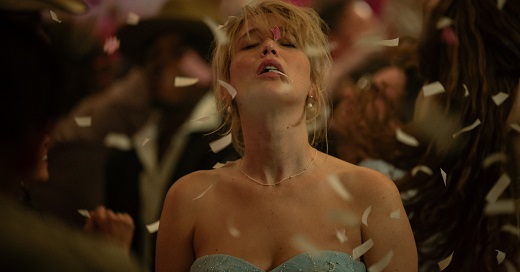
Die, Love (Die My Love2025), directed by Lynne Ramsay and starring Jennifer Lawrence and Robert Pattinson, it comes as one of the most intense portrayals of motherhood in recent cinema. Based on the novel by Ariana Harwicz, the film abandons traditional narrative conventions to explore its protagonist’s psychological breakdown through a restless, abrasive stream of consciousness full of disordered impulses. Check out the review.
The story of Die My Love
Ramsay builds the story from the inside perspective of Grace (Jennifer Lawrence), a writer who moves with her husband, Jackson (Robert Pattinson), to his old childhood home in the country. The arrival of the baby should mark a phase of stability, but it triggers exactly the opposite. Instead of following a conventional journey about postpartum challenges, the film is dedicated to exposing what it means to live inside the mind of someone who feels motherhood as an impossible weight to name.
The director gives up explanations and diagnoses. It doesn’t matter whether Grace is experiencing postpartum depression or postpartum psychosis; It matters how your perception of the world breaks down. This materializes in the opening scene, in which Grace observes the baby from afar while holding a knife, revealing an instability that goes beyond any socially acceptable discourse on mental health.
The rural routine, initially presented without glamour, intensifies her isolation. Jackson travels constantly for work, and Grace remains confined to the house, surrounded by a barking dog, indifferent neighbors and the growing feeling that she has lost her own body to imposed demands. Attempts at social interaction, such as the children’s party where she hands the baby to a stranger before walking away to drink wine, expose a drifting behavior, marked by a mixture of contempt and boredom.
Ramsay transforms this subjective deterioration into an image. Seamus McGarvey’s photography works with silvery, nocturnal light, creating an environment intermediate between dream and waking, always uncomfortable. The film alternates moments of silence and explosions of physical impulse, as if Grace reacted to the world solely on instinct. Recurring fantasies, like the motorcyclist who watches her from the road, function as manifestations of desire and frustration, dissolving boundaries between reality and delirium.
Despite the hypnotic atmosphere, the narrative sometimes falls into repetition. The director establishes the character’s emotional instability early and returns to this sensation several times without much variation. Still, the cast’s performance sustains the film. Pattinson portrays Jackson as a silent, absent man, while Sissy Spacek offers an unexpected presence as Pam, the mother-in-law who intuits Grace’s crisis while facing her own nocturnal lapses.
Review: is it worth watching Die, Love?
The central axis, however, is Jennifer Lawrence. The actress indulges in a physical, visceral and unprotected performance, building a character that oscillates between corrosive humor, apathy and repressed desire. His work gives authenticity to a film that does not seek rational explanations, but rather the representation of a mind that fights against its own daily life.
Die, Love is a radical study of motherhood, body and identity. Ramsay rejects any attempt to sugarcoat the experience and offers a portrait that, despite being difficult, remains magnetizing in its intensity. Grace’s journey is uncomfortable, fragmented, and at times exhausting — exactly as it should be.

Hi! I’m Renato Lopes, an electric vehicle enthusiast and the creator of this blog dedicated to the future of clean, smart, and sustainable mobility. My mission is to share accurate information, honest reviews, and practical tips about electric cars—from new EV releases and battery innovations to charging solutions and green driving habits. Whether you’re an EV owner, a curious reader, or someone planning to make the switch, this space was made for you.




Post Comment