Gary from “Zootopia 2” is a hit in China. Now, young people are buying poisonous snakes
Beijing
CNN
—
Qi Weihao recently welcomed a new member to the family: a beautiful and highly venomous blue snake.
The 21-year-old, originally from the central province of Jiangxi, bought the Indonesian pit viper for 1,850 yuan (US$260) two days after the premiere of Disney’s animated hit “Zootopia 2” on November 26.
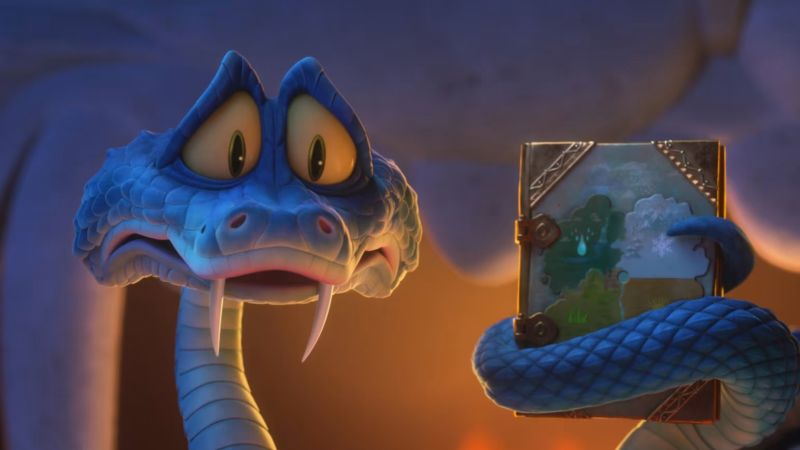
His favorite character was also the newest to the franchise: Gary De’Snake, believed to be inspired by the Southeast Asian snake.
As a reptile lover, Qi had wanted a blue snake for a long time, but finally decided to buy one after seeing the positive and adorable portrayal of the character, whose voice was provided in English by actor Ke Huy Quan.
“‘Zootopia 2’ helps give a better image to pet reptiles: they are not weirdos; and Gary is the most representative character among them,” Qi told CNN. “I love his enthusiastic attitude and sense of responsibility.”
The film — which arrived toward the end of the Year of the Snake in the Chinese zodiac — has become the highest-grossing foreign animation of all time in China, grossing more than 3.55 billion yuan ($503 million) at the box office so far. The previous record was held by the first “Zootopia” movie, released in 2016.
Worldwide, “Zootopia 2” surpassed $1 billion at the box office, according to Box Office Mojo, a website owned by IMDb, which tracks box office data.
In the film, Gary sets out to clear the reputation of his family—and all reptiles—with the help of the original protagonists, rabbit-fox duo Judy Hopps and Nick Wilde.
Qi added that reptile owners like him have long faced prejudice in China, where they are often seen as people with “a strange taste for ‘creepy’ creatures.” He hopes Gary De’Snake will help improve his image.
He is not the only one who loves the blue snake in the movie so much that he would like to have a real version, despite its venom.

Since the film’s release, major Chinese e-commerce platforms have seen an increase in searches and a rise in prices for the Indonesian pit viper—commonly known in China as the “island bamboo viper”—which costs between a few hundred and several thousand yuan, Chinese state media The Paper reported.
In recent years, reptiles have increasingly captured the hearts of young Chinese. More than 17 million people in the country owned exotic pets by the end of 2024, according to data cited by state agency Xinhua, which said the market size was approaching 10 billion yuan ($1.4 billion). More than 60% of these owners are Gen Z, according to the data.
A 2025 report on China’s pet industry noted that snakes account for more than 50% of all reptiles kept as pets.
Most of these reptiles are raised and domesticated by humans before being sold in physical stores, while some are available through online sellers who often ship them directly to buyers, according to Chinese state media reports.
According to Chinese laws and regulations, it is prohibited to send “various live animals” or “dangerous items such as toxins” by mail, but breeding the Indonesian pit viper is not illegal.
Growing interest in purchasing a highly venomous snake online has sparked official concern. Qi, an experienced reptile owner who drove 40 minutes to pick up his snake in person, agrees that it’s not a decision that should be made lightly.

Shakira premieres “Zoo”, the musical theme included in the movie “Zootopia 2”
“If you don’t have extensive experience and safe equipment in raising snakes, please don’t rush into keeping poisonous snakes on a whim!” Qi warned.
State-linked Chinese media The Beijing News also commented that “in the film, the blue snake is endowed with endearing and brave, human-like traits, but the real venomous snake, the island bamboo viper, is far from a harmless ‘fashion toy’.”
“If a venomous snake escapes or attacks, it endangers not only the owner and his family, but can also become a public safety incident,” the newspaper added.
A CNN review on Friday found that Blue Viper is no longer available for sale on major Chinese e-commerce platforms, including ByteDance’s Douyin; Xiaohongshu (similar to Instagram) or Alibaba’s Xianyu second-hand market. But there were still numerous ads on JD, China’s largest online retailer, marked “shipping included.”
When CNN informed JD, the articles were immediately removed. A JD spokesperson said: “We strictly prohibit the sale of poisonous animals on our platform and, once identified, items are immediately removed.” CNN also contacted Alibaba, ByteDance and Xiaohongshu for the reasons behind the related deletions.
Other Gary fans in China are choosing to spend their money on safer snake-themed products.
On Taobao, the surprise box of the blue snake character, where buyers do not know exactly what is inside until they open it, was among the 10 best sellers of the week and the character’s plush toys are also highly sought after in physical stores.
“We currently do not have Gary plushies in stock and they may not be available soon,” a Shanghai Disneyland worker told YiCai, a Chinese state media, about a week after “Zootopia 2” premiered.
According to YiCai statistics, the “Zootopia” franchise has made collaborations with more than 70 Chinese brands—especially in the fashion collectibles market—including Pop Mart, whose Labubu dolls gained global popularity earlier this year.

Hi! I’m Renato Lopes, an electric vehicle enthusiast and the creator of this blog dedicated to the future of clean, smart, and sustainable mobility. My mission is to share accurate information, honest reviews, and practical tips about electric cars—from new EV releases and battery innovations to charging solutions and green driving habits. Whether you’re an EV owner, a curious reader, or someone planning to make the switch, this space was made for you.


Post Comment