Is Frankenstein: Is the Science Behind Mary Shelley’s Monster Real?
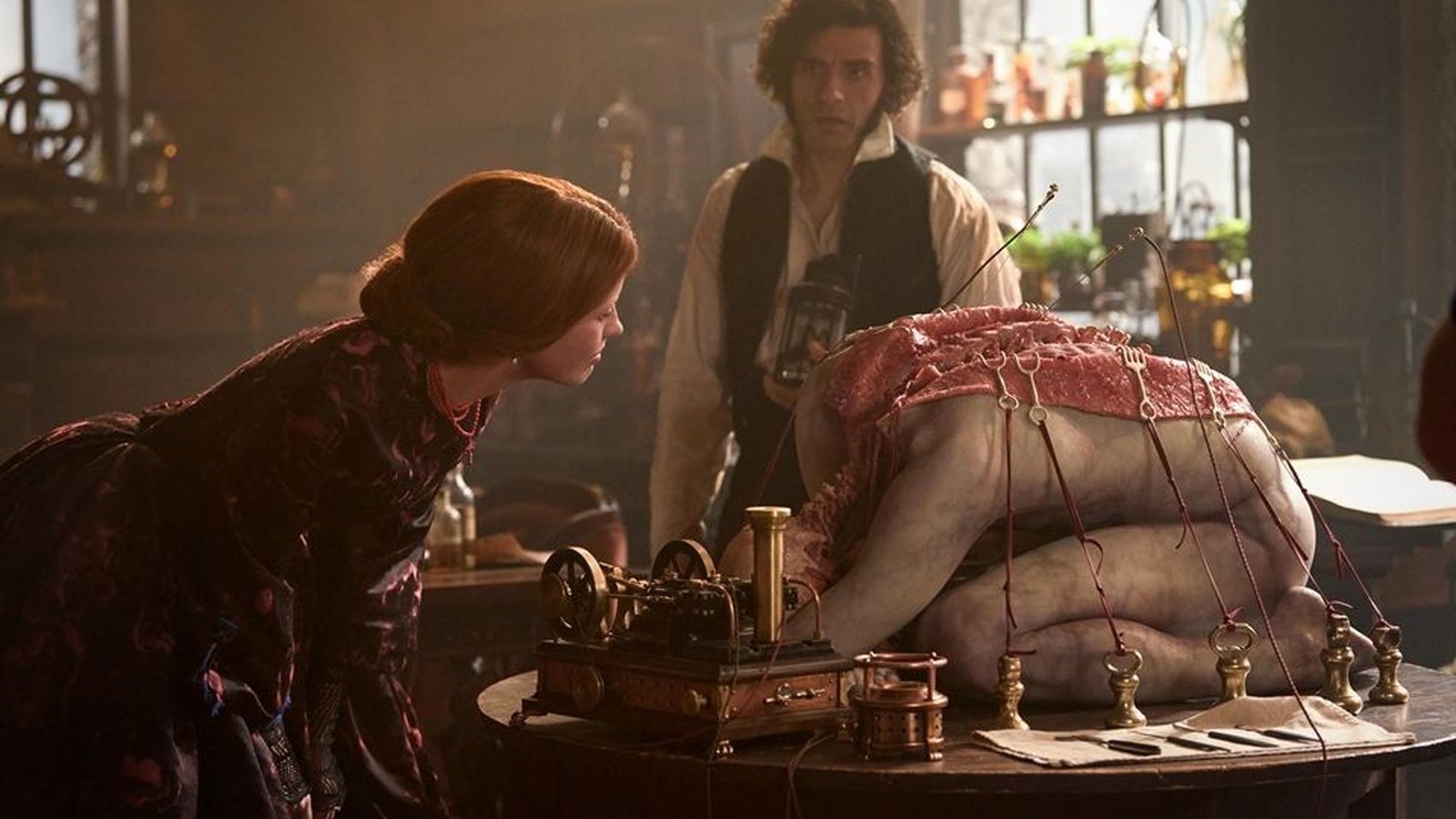
Frankenstein has always been a staple of horror and science fiction literature, but also a reflection of the tensions between science, ethics and imagination in the early 19th century.
Interest in the work grew again with the new adaptation of the Netflixwhich presents important changes in relation to the novel. Changes, in fact, that were explored in the article about the differences between the book and the film.
Amid the renewed debate, a question returns: After all, did the science that inspired Mary Shelley have any real basis?
To understand this, you need to go back in time and look at how electricity, medical experimentation, and philosophical discussions shaped one of the most influential stories in literature.
The creature of Victor Frankenstein it did not arise merely from literary imagination. She was born in a period of intense discoveries and deep fears about how far science could, or should, go.
Who was Mary Shelley and how did Frankenstein come about?
Mary Shelley was just 18 when she developed the idea that would become Frankenstein. In 1816, she spent time in Switzerland with Percy Shelley, Lord Byron and other intellectuals, during a period marked by storms and gloomy weather.
The group’s conversations revolved around philosophical and scientific themes, and it was there that the famous challenge of writing a horror story arose.
These intense discussions were fundamental to the creation of the novel, and also to influence later works, including modern readings such as criticism that interprets the new film as a manifesto on artificial intelligence.
Mary Shelley grew up surrounded by thinkers, politicians, writers and scholars. Her father, William Godwin, and her mother, Mary Wollstonecraft, were influential figures, and the young author was exposed to debates about science, ethics and society from an early age.
His novel emerged as a response to the spirit of his time: restless, curious and fearful of the human capacity to surpass natural limits.
The historical and scientific context
The early 19th century was an era of bold experimentation. Electricity, newly discovered and little understood, was seen almost as a vital force.
Researchers were investigating its applications in the human body, believing that electric shocks could restore muscle functions or even bring corpses closer to reflex movements.
Public demonstrations of galvanismo filled auditoriums. Limbs of dead animals twitched in front of the electric sparks, fascinating and disturbing the audience.
This scientific environment directly influenced Mary Shelley and can be seen in the dark and experimental atmosphere of her book. To this day, this imagery inspires striking visual creations, as revealed in the special report on how the makeup of the monster in the new film was created.
Science at the time was without many ethical regulations, something that echoes the themes explored in the novel. Shelley translated a collective fear into literature: the fear that scientific knowledge could exceed moral limits.
What is the science behind Frankenstein’s monster?
Although Mary Shelley does not describe in detail how Victor Frankenstein creates his monster, the work strongly suggests the use of electricity and manipulation of organic tissues.
This lack of precision is not accidental: the author was more interested in the philosophical implications of the act than in its technical process. But his inspiration, yes, came directly from real experiments.
Among the most influential was galvanism, an area that sought to understand how electrical currents influenced muscles and nerves. These tests, conducted by some of the best-known scientists of the time, were fundamental for Shelley to imagine a creator capable of “animating” dead matter.
This dialogue between literary imagination and experimental science continues to inspire modern interpretations of the work, as illustrated by the fun and unexpected readings gathered in the list of the best memes that emerged after the film’s release.
What is galvanism?
Galvanism was born from the experiments of Luigi Galvaniwho observed that dead frog legs moved when connected to different metals. He believed that there was an “animal electricity” responsible for vital impulses. The discovery quickly spread across Europe and inspired both awe and fear.
But Giovanni Aldini, Galvani’s nephew, took the experiments even further. In public demonstrations, he applied electric currents to recently executed corpses.
The bodies contorted, opened their eyes, raised their arms. The reactions were involuntary, but frightening enough to fuel rumors of reanimation.
These reports were widely reported in newspapers, and Mary Shelley undoubtedly came into contact with them.
)
Real experiments with electricity and human bodies
In addition to galvanists, other researchers investigated how electricity affected tissues and organs. Erasmus Darwin, for example, studied involuntary movements in organisms and speculated about the nature of life.
Rudimentary resuscitation techniques were also beginning to be tested, including incipient methods of artificial ventilation and cardiac massage.
This scientific scenario, at once promising and frightening, directly influenced Shelley’s work. Frankenstein’s creature was born from a universe in which the boundary between life and death seemed, for the first time, open to experimentation.
It is no coincidence that similar themes continue to inspire audiovisual works, as shown by the selection of films similar to Frankenstein, ideal for those who want to explore similar approaches from other perspectives.
Is Frankenstein scientifically possible?
Despite the fascination with experiments at the time, modern science is clear: No, the creation of Frankenstein’s monster is not possible. The human body begins to suffer cellular degradation minutes after death. Tissues lose function, nerves stop conducting impulses and the brain suffers irreversible damage after just a few minutes without oxygen.
Even with advances such as complex transplants, biotechnology, and modern life support, nothing comes close to the resuscitation envisioned by Shelley. The novel operates in speculative territory, where real science provides only the initial spark.
Still, modern adaptations continue to reinterpret the story. The new Netflix version, for example, presents an outcome full of nuances, detailed in the article that explains the film’s ending.
Why Monster Creation Is Impossible
The main obstacle is biological. Every cell in the body depends on constant oxygen to maintain its functions. Tissues begin to decompose quickly after death, and there is no technology capable of restoring the brain’s electrical activity without severe damage.
Furthermore, integrating parts from different bodies, as suggested in the novel, is impractical. Even modern transplants require extreme compatibility and heavy immunosuppression. Building an organism from different parts would violate virtually every known principle of immunology.
Shelley did not seek scientific precision. She wanted to explore the ethical consequences of inordinate ambition and this remains the heart of the narrative.

The ethics of science: Frankenstein’s great message
Frankenstein remains relevant because it is about scientific responsibility. The novel does not criticize science, but rather the abuse of it. Victor Frankenstein creates life, but takes no responsibility for what he did. The creature, abandoned and rejected, becomes a symbol of the dangers of an inhumane science.
This debate is current. It appears in discussions about artificial intelligence, biotechnology, genetic manipulation and emerging technologies. Shelley’s creature is a permanent warning of the risks of ignoring ethics.
The science behind Frankenstein, therefore, is not real in the literal sense, but it is profoundly true as a reflection of the scientific, philosophical, and moral concerns of the early 19th century.
Mary Shelley turned complex debates about electricity, life, and responsibility into a narrative that spans centuries.
To continue exploring this universe, it’s worth finding out more adaptations and analyzes here on Minha Série or sharing this content with someone who also likes stories that mix science, imagination and ethics!

Hi! I’m Renato Lopes, an electric vehicle enthusiast and the creator of this blog dedicated to the future of clean, smart, and sustainable mobility. My mission is to share accurate information, honest reviews, and practical tips about electric cars—from new EV releases and battery innovations to charging solutions and green driving habits. Whether you’re an EV owner, a curious reader, or someone planning to make the switch, this space was made for you.


Post Comment