It’s a legendary sci-fi film, but it has nothing to do with the original story it’s based on – which is even better – Film News
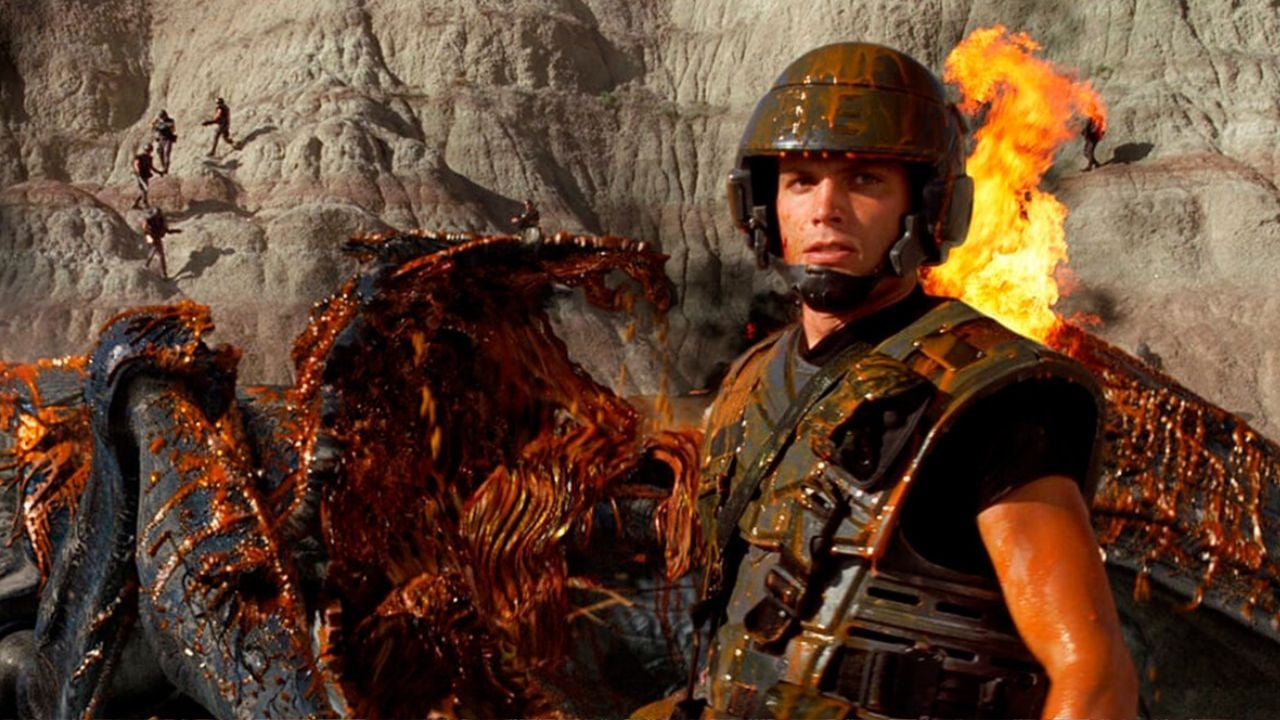
How Starship Troopers went from Robert A. Heinlein’s novel to Paul Verhoeven’s cinematic satire.
Starship Troopers is based on Robert A. Heinlein’s novel, which combines action, philosophy and politics so boldly that it’s no wonder it has been the subject of intense debate for more than six decades. Yet it is also a deeply misunderstood book, harshly judged by those who have seen only its militaristic surface. Paul Verhoeven’s 1997 film adaptation, while completely different, was no less controversial. It has become a cult classic for those viewers who get the joke and fervently defend it as an undisputed science fiction classic.
Heinlein’s novel: a landmark in military science fiction
Published in 1959, Starship Troopers won the Hugo Award in 1960, establishing itself as a seminal work in the military science fiction genre. Heinlein explored the concept of citizenship through military service, presenting a system in which only those who fulfilled their duty could exercise the right to vote. Throughout the novel, the soldiers’ training is meticulously described: discipline, obedience and cooperation are fundamental values, presented as the basis of a society capable of surviving and thriving in the face of external threats.
One of the novel’s most innovative elements is the introduction of armored exoskeletons, a concept that would influence not only generations of science fiction writers, but also video games and universes like Halo and Warhammer 40,000. Furthermore, the cultural impact of the work remains notable: even today, Starship Troopers appears on the United States military’s recommended reading lists, not for its futuristic action, but for the reflection it offers on leadership, responsibility and civic virtue.
Of course, this same fact did not go unnoticed by critics: many analysts accused Robert A. Heinlein of glorifying militarism and authoritarianism, starting a debate that continues to this day.
TriStar Pictures
The novel was published at the height of the Cold War, a period marked by nuclear fear and tension between the United States and the Soviet Union. The launch of Sputnik in 1957 and the space race reinforced the perception that military technology was fundamental to humanity’s survival. In this context, Heinlein presented a world where discipline and civic duty were essential and inseparable from militarism, challenging pacifist movements and proposing an approach in which survival depended on belligerence and obedience to the system.
Voluntary military service as a requirement for full citizenship also functioned as a mechanism for reflection on individual and collective responsibility. The novel is not merely a story about massive nuclear battles against alien insects; is a treatise on the importance of assuming social and political responsibilities, on how rights without duties are unsustainable, and on how a society can be organized more effectively if those who participate in it understand the consequences of their actions.
TriStar Pictures
Verhoeven’s film: satire and subversion
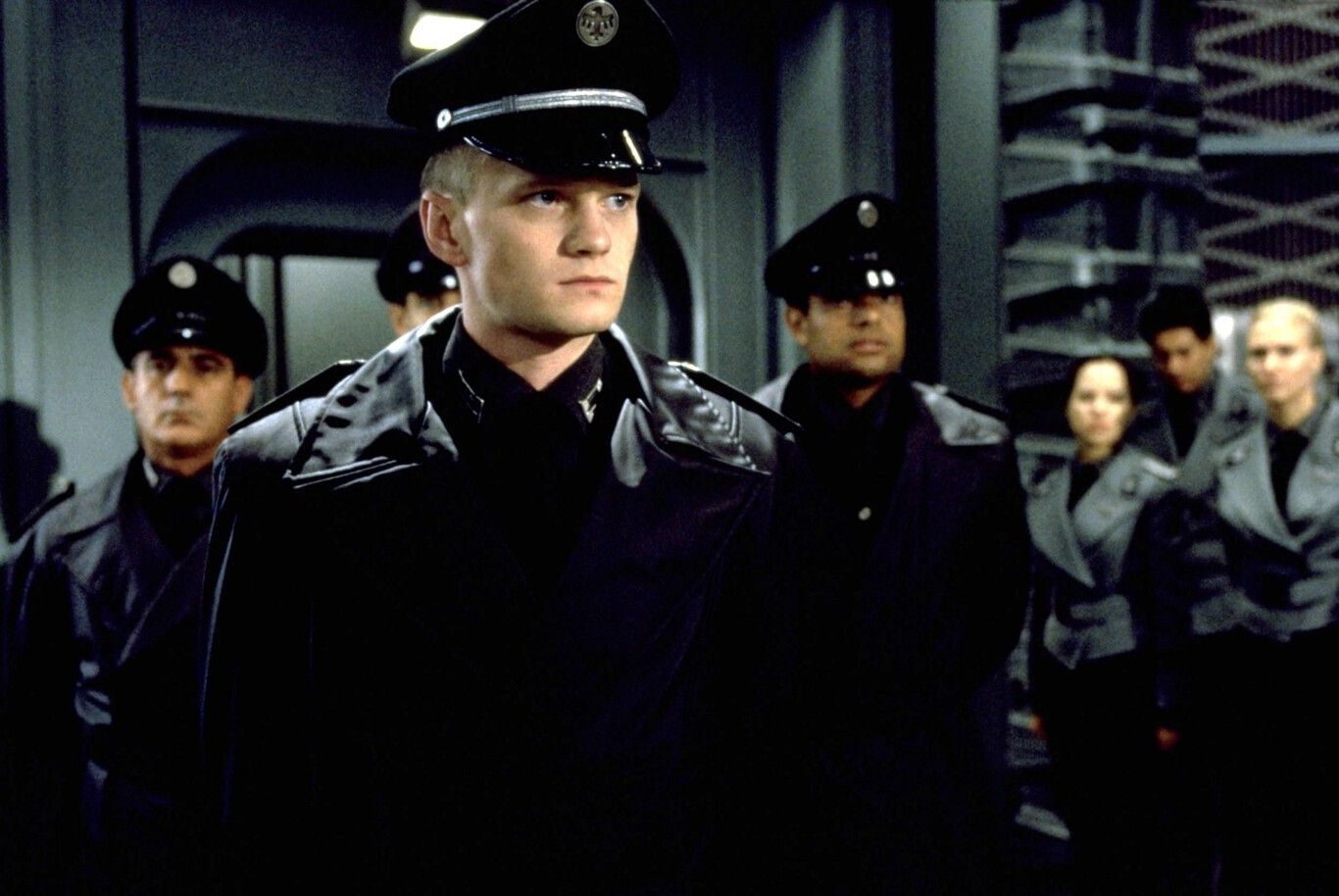
When Paul Verhoeven released his adaptation in 1997, the world had changed. Starship Troopers became a $100 million box office success, embracing visual excess, violence and acidic humor that functioned as a critical tool. Verhoeven, who admitted he had not read the entire novel, turned the story into a parody of fascism and political propaganda, using fake news and hyperbolic scenes to ridicule militarism.
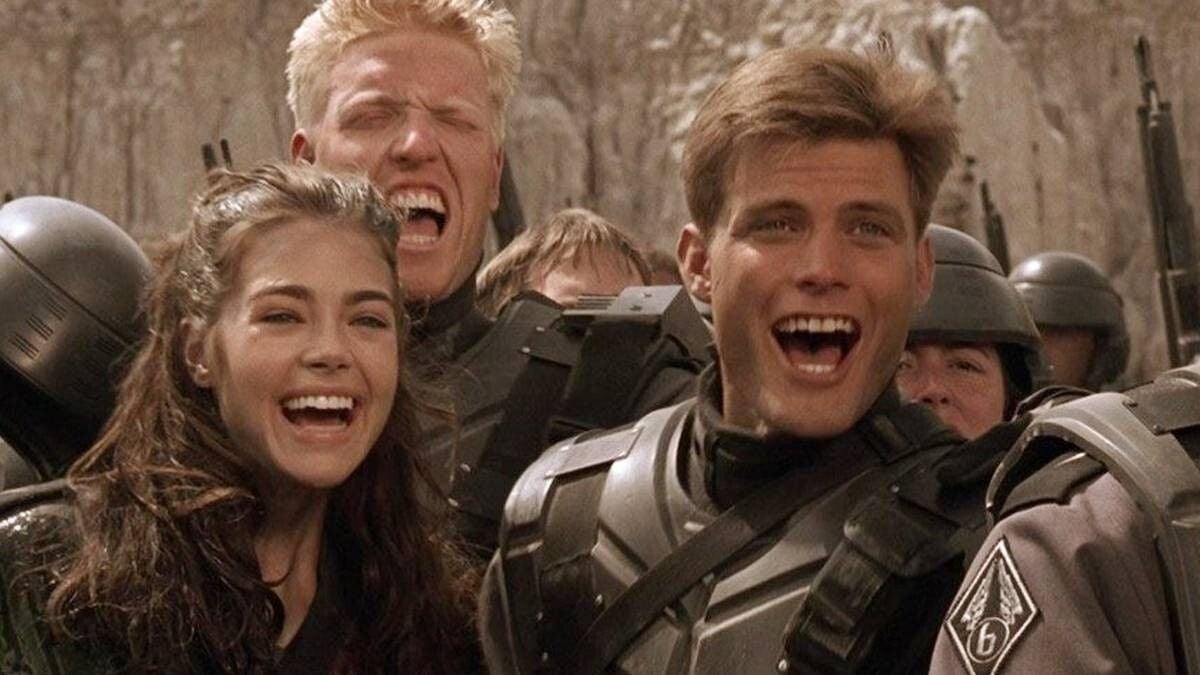
The film differs radically from the book in several aspects. While Heinlein offered a reflection on duty and citizenship, Verhoeven focused on a dark comedy against authoritarianism. Technology and exoskeletons, central to the novel, disappear in the film to emphasize hand-to-hand combat, and the protagonist, Johnny Rico, goes from being a young Filipino to being played by Casper Van Dien, an example of the whitewashing of characters in Hollywood. But, despite these differences, the film achieved its objective of being completely caricatured and, in doing so, achieved its own cult status, precisely because of its irony and satirical criticism of societies obsessed with military apparatus.

TriStar Pictures
The film’s release coincided with a post-Cold War world where the United States was consolidating its hegemonic power while maintaining open war fronts around the globe, especially in the Middle East, all while presenting itself as a defender of freedom and democracy around the world. Verhoeven’s satire reflects this moment, criticizing the idea of a government subject to the demands of the military-industrial complex and media manipulation. The film’s advertising aesthetic and fake news are a commentary on the media culture of the 1990s, marked by globalization and the rise of the internet. In contrast to the patriotic blockbusters of the time, such as Independence Day, Verhoeven offered an ironic mirror that exposed the dangers of the cult of uniforms, parades and warlords.
The comparison between the novel and the film makes it clear how the same story can generate completely different interpretations. Heinlein defined military science fiction, inspiring video games, novels and even military doctrines, while Verhoeven’s film sought to facilitate the understanding of a warning about authoritarianism. Heinlein’s themes contrast with the film’s critique of fascism, propaganda, and social manipulation. Reception also differs: the book was controversial but respected; the film, initially misunderstood and later valued as a cult satire. The distance between the novel and the film is not accidental. The result was a dialogue between two radically different but complementary works, both capable of provoking reflection.
TriStar Pictures
Why were the novel and film misunderstood?
Both the book and the film have been accused of being pro-fascist or overt Nazi propaganda, a judgment that ignores the true message of Starship Troopers. Heinlein was not trying to glorify militarism, but rather to explore the dangers of an ultra-militarized society fascinated by fascist symbols. Although the novel raises very interesting questions about the role and need for the armed forces in society, its language and development may seem extreme in its warning about the risks of decoupling rights and responsibilities in any society, as it is clear that citizens have social obligations.
Likewise, Verhoeven’s film was misunderstood by those who failed to capture its irony and satire on propaganda and the cult of power, no matter how exaggerated its presentation in the film. The general public focused on the anecdotal reports and failed to recognize the obvious criticism. Today, both the novel and the film remind us that science fiction not only entertains, but also serves as a critical mirror that reflects the social, political, and cultural tensions of each era.

Hi! I’m Renato Lopes, an electric vehicle enthusiast and the creator of this blog dedicated to the future of clean, smart, and sustainable mobility. My mission is to share accurate information, honest reviews, and practical tips about electric cars—from new EV releases and battery innovations to charging solutions and green driving habits. Whether you’re an EV owner, a curious reader, or someone planning to make the switch, this space was made for you.


Post Comment