Park Chan-wook’s satire on work
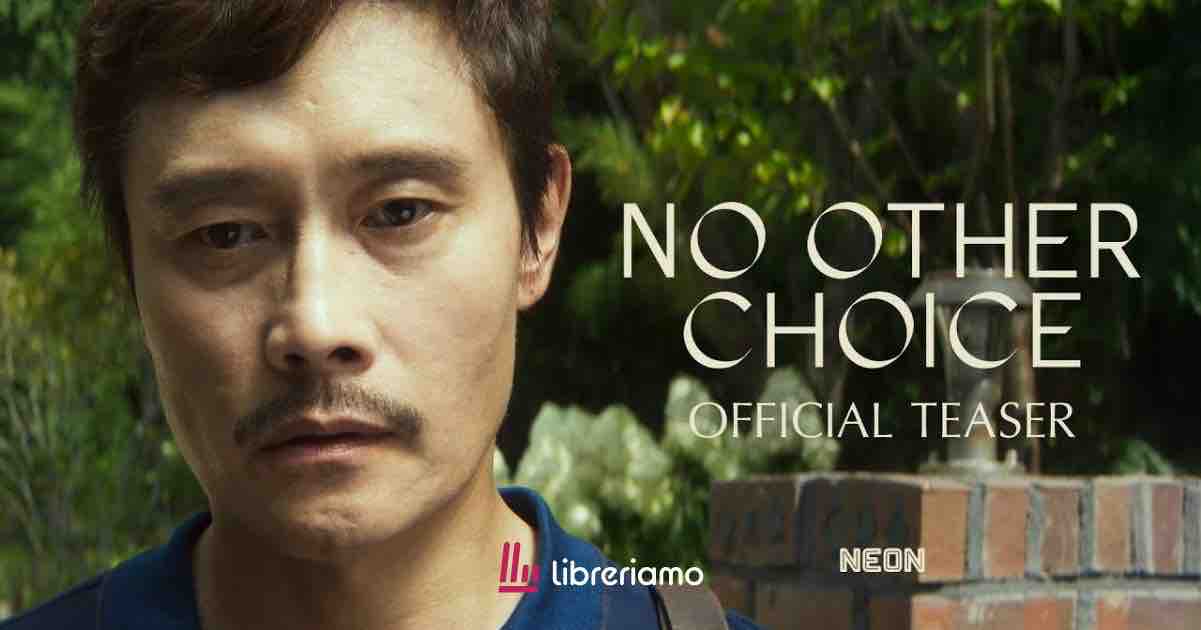
There is a moment in life when everything seems to vanish: not only work, but identity itself, daily dreams, self-confidence. It is in this space of fragility that “No Other Choice”, Park Chan-wook’s latest film, presented at the 2025 Venice Film Festival and already hailed as one of the most significant works of the year, intertwines black comedy, social satire and reflection on the meaning of contemporary living.
Park’s cinema is never “genre” in the strict sense: it is a way of looking at the world that puts the human being at the center, with his fears, his vulnerability and his ferocity. With “No Other Choice”, the South Korean director not only tells the desperate story of a man who loses everything, but invites us to question what it means to live in a system that leaves no room for error, weakness, uncertainty, and which pushes every possible choice to the extreme.
“No Other choice”: Cinema as cultural introspection
“No Other Choice” is not just a film to be seen: it is a work to be explored with the mind and emotions, because it mixes satire and tragedy in order to question profound beliefs about the value of work, family and our collective identity. Like all of Park Chan-wook’s great works, it is an invitation to look at the present with clarity and to question the social forces that shape our lives.
“No Other Choice” becomes a very powerful critical lens, capable of transforming the viewing of a film into a reflection on what “having no other choice” really means. It is cinema that accompanies, shakes and above all invites us to think: a cultural gesture necessary to understand our time.
The plot as a mirror of our era: A family, a job, an identity
“No Other Choice” follows You Man-su (played by Lee Byung-hun), a man who has dedicated 25 years of his life to working in a paper mill, finding his sense of self in routine, craft and economic stability. When his company suddenly fires him, that balance is shattered. The house, the family, the future plans become fragile: the domestic economy falters, the mortgage weighs heavily, job interviews follow one another without success.
This loss is not only material: it is the annihilation of a role, of a social function which for Man-su was synonymous with dignity. It is here that the film transforms from a personal narrative into a mirror of our era, in which the dynamics of work, precariousness, automation, competition, are not just abstract concepts, but daily pressures.
Tragic irony as a critical lens: deaths, satire and capitalism
When the protagonist realizes that he really has “no choice” but to create the job opportunity that the system denies him, Park Chan-wook goes beyond simple noir or thriller dramaturgy. In fact, Man-su decides to physically eliminate the competitors to guarantee himself the possibility of getting a job again. This escalation, as grotesque as it is tragically recognisable, transforms the film into a ferocious satire of capitalist-corporate logic.
In this ironic reversal, the act of violence almost becomes a metaphor: when the economic system crushes the individual to the point of annihilating him, violence suddenly stops being a mere individual transgression to become an image of social desperation. Black comedy is only the surface under which a radical criticism of the contemporary world takes place.
A unique narrative register: grotesque, tragic, familiar
Park Chan-wook is known for his ability to mix tones and registers, and here is no exception. The film is a black comedy, with moments that elicit nervous laughter, but also a painful portrait of family and the psyche of a man struggling with the loss of role and meaning.
The director does not limit himself to telling an individual journey: he highlights how work is often the cornerstone around which our identity, our self-esteem, our emotional relationships revolve. His wife Mi-ri (played by Son Ye-jin) and his children are not mere supporting actors: they are the emotional stakes, the object of Man-su’s every fear and every extreme choice.
This family dynamic, together with the sociable satire of the world of work, transforms “No Other Choice” into a film that speaks to the viewer not with a moralizing tone, but with that of a deeply human and disturbing narrative conscience, just as the great cinema of Park Chan-wook can do.
Between black comedy and social reflection: satire as a cultural mirror
In a world where automation, artificial intelligence and the precarization of work seem to constantly threaten the dignity of the individual, “No Other Choice” stands out for its cruel relevance. It’s not just a thriller or a black comedy: it’s an exploration of the social conditions that make “having no other choice” a possible option.
The work brings to light uncomfortable questions: what does it mean to be indispensable in a society where skills risk being obsolete tomorrow? How far can a person go to protect their family and status? And above all: in a society that rewards efficiency and punishes vulnerability, what is the price to pay for staying “inside the system”?
Park Chan-wook doesn’t provide simple answers. Rather, it invites the viewer to look these contradictions in the face, with a fierce, ironic and at the same time deeply empathetic gaze.

Hi! I’m Renato Lopes, an electric vehicle enthusiast and the creator of this blog dedicated to the future of clean, smart, and sustainable mobility. My mission is to share accurate information, honest reviews, and practical tips about electric cars—from new EV releases and battery innovations to charging solutions and green driving habits. Whether you’re an EV owner, a curious reader, or someone planning to make the switch, this space was made for you.


Post Comment