The Chinese film that is a true visual prodigy, even if nothing of what it says is understood: an unfathomable but very complicated masterpiece
Tell them about one of the most ambitious of recent times, the most beautiful too, and the most difficult on a narrative level for complete understanding. Let’s talk about a great event cinematographic that celebrates cinema in all its essence.
Its title is Resurrection and it is the latest work of the Chinese filmmaker Bi Ganwho had already dazzled with his previous film, Long journey into the night and now goes one step further with this unfathomable piece that won last year’s Special Jury Prize. Cannes Film Festival and which has now been presented at the Seminci in Valladolid.
Bi Gan proposes a sensory journey and ‘metanarrative’ that explores the relationship between dreams, memory and the very nature of cinematographic art. Let’s analyze its keys.
In the universe of Resurrectionhumanity has achieved longevity to cost of lose the ability to dream. Only a few, called ‘fantasmers’ or ‘delirious’, refuse to abandon the dream world, taking refuge in fictions that evoke different stages and styles of cinema.
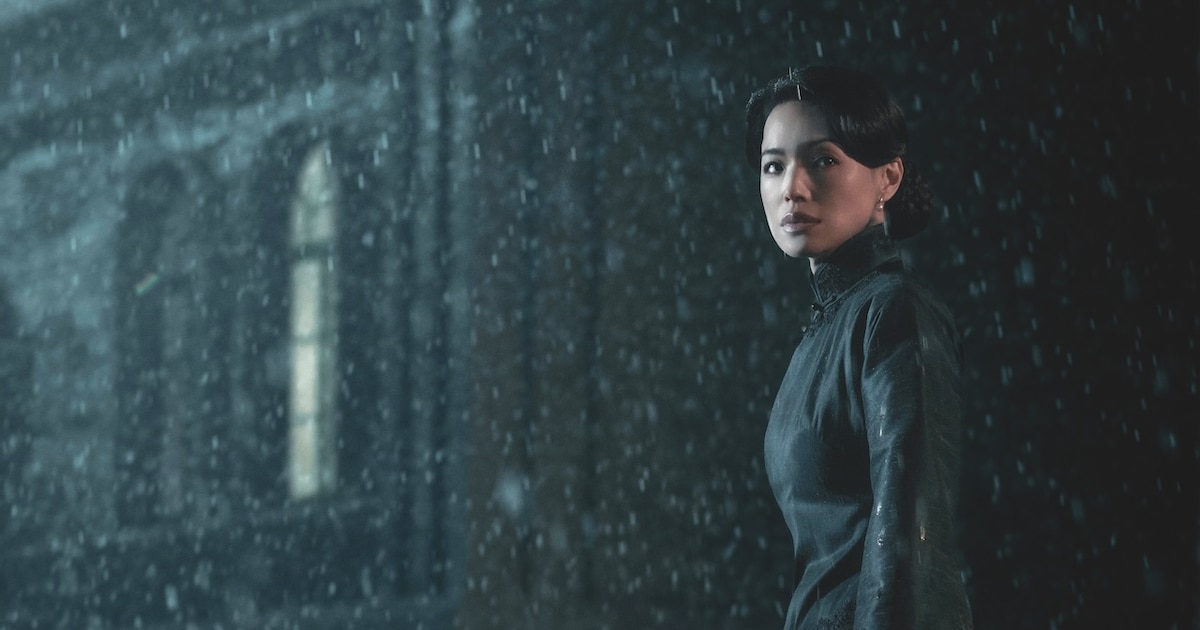
A mysterious woman, played by the mythical Shu Qitakes on the task of rescuing them from these imaginary universes, thus preserving the linearity of time and the essence of human experience.
“Cinema, for me, is always a game. And these are simply ways of making movies. The most important thing is the ending, it is the people who shine in the film, the emotion. Not only towards the cinema but also towards the world,” said the director at the festival’s press conference.
The film is articulated in six episodeseach of which yields tribute to a genrea time and a meaning, in a journey that spans from the origins of silent cinema to the emergence of new technologies in the nineties.
The first segment, set in the first decades of the 20th century, recreates the wonder and innocence of pioneers like Mélièswith explicit references to works such as The irrigator watered, The trip to the moon, Nosferatu and German Expressionism.
The staging turns the screen into a magical box full of surprises and fantasy images, where the ‘metanarrative’ and the tribute intertwine.
As the narrative progresses, the viewer is taken through successive decades of cinema, accompanying the actor Jackson Yeewho plays five different characters throughout the episodes.
The second fragment delves into the aesthetics of film noir and espionage of the 1930s and 1940s, while subsequent chapters explore the drama rural chinofolklore, and the atmosphere of the eighties, where the protagonist becomes the father of a girl gifted with magical abilities.
The climax of the film comes with an extensive sequence shot of forty minutesfilmed on the eve of the year 2000, in which the protagonist, accompanied by a vampire-womanimmerses itself in a labyrinth of parties, fights and karaokes, evoking the aesthetics of Wong Kar-wai y Hou Hsiao-hsien.

“Everyone had high expectations of my sequence shot and that is precisely why I didn’t want to do it at first. But it is also the technique that is most familiar to me and was consistent with what we wanted to show in that final episode, the night of eve of the new millennium”Bi Gan detailed.
The epilogue of Resurrection takes up the rescue motif, with the figure of Shu Qi recovering the ‘ghost’ and transforming it into a film monsterin an operation that has to do with the very nature of the film.
The character sensory and fragmentary of the work, which prioritizes visual and emotional experience over narrative linearity, has its drawbacks: it is difficult to follow to the point that, at times, it becomes incomprehensible. Of course, it is always dazzling on a formal level.
The film insists on paying tribute to cinema as a generator of dreams, even when the last screen is destroyed and the spectators disappear one by one. In a forceful final shot, Bi Gan summarizes his reflection on the passage of time and the hope of a resurrection.
Beyond nostalgia, Resurrection presents a look towards the future of cinema and humanity, in a context marked by the omnipresence of technology. “We live in a world of very advanced technologywe depend on it completely in our daily actions. And it is normal that there are many authors worried about the future. But we have to remember that what we really need is our body. We use our legs to walk and go further, our eyes to see, our minds to think. Of course, the change in the world makes us pay attention to the machine, but I think we have to return to traditional, old, pure, simple things. Our knowledge of the world seems flawed but it is what builds our consciousness and our society, it is what makes us human,” Bi Gan reflected in the Valladolid International Film Week.

The film stands as an ambitious exercise in visual virtuosity and narrative, in which the saturation of forms and references does not prevent images of great beauty and disturbing power from emerging.
Con ResurrectionBi Gan reaffirms his place as one of the most innovative filmmakers on the contemporary scene, capable of transforming the history of cinema into a space of experimentation and a reunion with the collective dream of the 20th century. The film will be released in theaters next November 28.

Hi! I’m Renato Lopes, an electric vehicle enthusiast and the creator of this blog dedicated to the future of clean, smart, and sustainable mobility. My mission is to share accurate information, honest reviews, and practical tips about electric cars—from new EV releases and battery innovations to charging solutions and green driving habits. Whether you’re an EV owner, a curious reader, or someone planning to make the switch, this space was made for you.





Post Comment