The controversies surrounding the new film “Wuthering Heights”
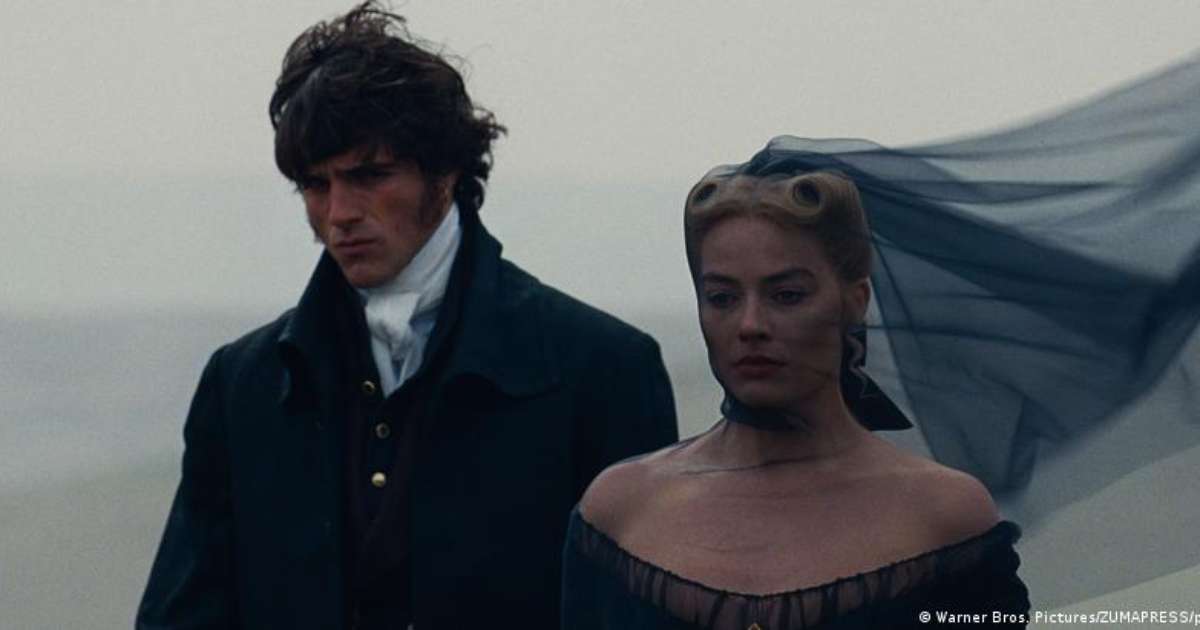
The new adaptation of Emily Brontë’s 1847 work has the challenge of being faithful to the novel without racializing the protagonist. Fans criticize the choice of main actors and the erotic tone of the new film. A new adaptation of the English classic Wuthering Heights — which some consider “the greatest love story of all time” — will hit cinemas in Brazil on February 12th, piggybacking on Valentine’s Day, a date that in parts of the world is celebrated on February 14th.
The new film features a star-studded cast, led by Margot Robbie (Barbie, The Suicide Squad, The Wolf of Wall Street) as the protagonist Catherine, and Jacob Elordi (Frankenstein, The Kissing Booth) as Heathcliff.
Directed by Emerald Fennell, the trailer released last week promises a circumspect cinematic approach to Emily Brontë’s gothic novel, published in 1847. And the new adaptation also arrives surrounded by controversies, such as the choice of protagonists.
Set on the moors of West Yorkshire, England, the trailer suggests eroticism while evoking the feeling of damp walls and hearts aching for a love doomed to fail — with enough anguish to inspire any fan of emo style. The amount of rain, fog, snow, and long-suffering stares in the trailer indicate that things won’t end well for the star-crossed lovers.
The trailer also features a new song, Chains of Love, by English pop star Charli XCX, who composed the film’s soundtrack — her first album following the global hit Brat.
For those who have never read the novel and whose only reference is the song Wuthering Heights, by Kate Bush (1978) — also popularized in Brazil in the 1990s in the voice of André Matos, former lead singer of the Brazilian band Angra —, this is the plot: Heathcliff is an orphan from Liverpool described as “a dark-skinned gypsy” — a term that, in the context of the 19th century United Kingdom, implied foreignness or racial difference. He is taken in by the fair-skinned Earnshaw family. Heathcliff forms a bond with Catherine, who ends up marrying the wealthy Edgar Linton to improve her social position. Heathcliff returns years later, rich and with a different appearance.
Heathcliff’s love turns to revenge, and the toxic bond between the two destroys the lovers’ families for generations. Heathcliff demonstrates a possessive love for Catherine, while using threats, isolation, and humiliation to dominate everyone around him.
Why the story remains a success to this day
Emily Brontë died at age 30, shortly after the book — her only novel — was published. The work received severe criticism, shocking readers and critics.
But after her death, the book’s reputation began to change, with authors such as Virginia Woolf helping to cement Emily Brontë’s work as a masterpiece of English literature.
The story continues to resonate over the years, leading to at least 14 major film adaptations, as well as TV series, plays — and even a Bollywood film (the powerful Indian film industry).
Why does this narrative still fascinate viewers today? One reason may be that voyeurism has not lost its appeal.
“She connects these clichés of romance and unhappy endings with a level of aggression and violence that the book describes quite explicitly and that is still shocking by today’s standards. This voyeurism spans the ages,” explains Caroline Koegler, professor of English literature at the Free University of Berlin.
Brontë, says Koegler, presents violence as something “horrifying and exciting at the same time.”
The neglected issue of racism
But there is a more problematic aspect to the novel that goes beyond the generally highlighted theme of the difference in social class between the protagonists.
Heathcliff, who Koegler describes as “ambiguously non-white,” is transformed into a monster—a product of the colonial context in which the book was written—and, unfortunately, part of what made the story interesting at the time.
“At first, we are a little encouraged to sympathize with Heathcliff, who was mistreated by his brothers, but this is left aside and, for much of the plot, he is just this tormentor, aggressor of white people”, explains Koegler.
“My interpretation, and that of many other people, is that the novel associates this violence and aggression with a racialized subject, something that still has weight today. We still deal with a society that invests in stigmatizing marginalized groups and portraying them as dangerous or aggressive, when in fact they are the ones who suffer the consequences.”
Difficult plot to adapt
Gothic novels explored themes of fear, including fear of the “other”, whether a monster (supernatural themes were common in Gothic work) or a human. In the famous novel Jane Eyre, written by Emily Brontë’s sister Charlotte, there is also a racialized character, Bertha, who is repeatedly blamed for things that go wrong, reflecting attitudes typical of the Victorian era.
When Wuthering Heights was published in 1847, the United Kingdom had outlawed slavery just over a decade ago. In the US, however, slavery was still legal, and many Britons remained economically linked to it through trade, cotton, and finance.
Wuthering Heights, Koegler says, brings the fear of role reversal “to haunt the white settler nation in a rural area.” The idea was to inspire fear that one day “the roles could be reversed and someone like Heathcliff would act like a would-be planter who tortures and abuses those who depend on him.”
Film adaptations, says Koegler, face the conflict of how to be faithful to the novel “without replicating this very questionable dynamic of having a racialized subject blamed for everything.”
For this and other reasons, the novel has been described by directors as notoriously difficult to adapt, with some filmmakers calling it nearly impossible to film.
Peter Kosminsky, director of the 1992 film, later admitted that he regretted making his version, saying it was “a really terrible adaptation”.
The 2011 film, directed by Andrea Arnold, brought race to the center, casting a black actor in the role of Heathcliff and showing a more human side to him than in Brontë’s novel.
Now, director Emerald Fennell’s casting choice is already fueling debate about how true to the book the 2026 film will be. Margot Robbie, at 35, is seen as too old to play the teenage Catherine, while Jacob Elordi doesn’t seem to embody Heathcliff’s ambiguous ethnicity.
Earlier this year, casting director Kharmel Cochrane defended the choices by saying “there’s no need to be precise” as the source material is “just a book.” Purists may disagree.

Hi! I’m Renato Lopes, an electric vehicle enthusiast and the creator of this blog dedicated to the future of clean, smart, and sustainable mobility. My mission is to share accurate information, honest reviews, and practical tips about electric cars—from new EV releases and battery innovations to charging solutions and green driving habits. Whether you’re an EV owner, a curious reader, or someone planning to make the switch, this space was made for you.


Post Comment