The music of Kaamelott dissected by its composer, Alexandre Astier
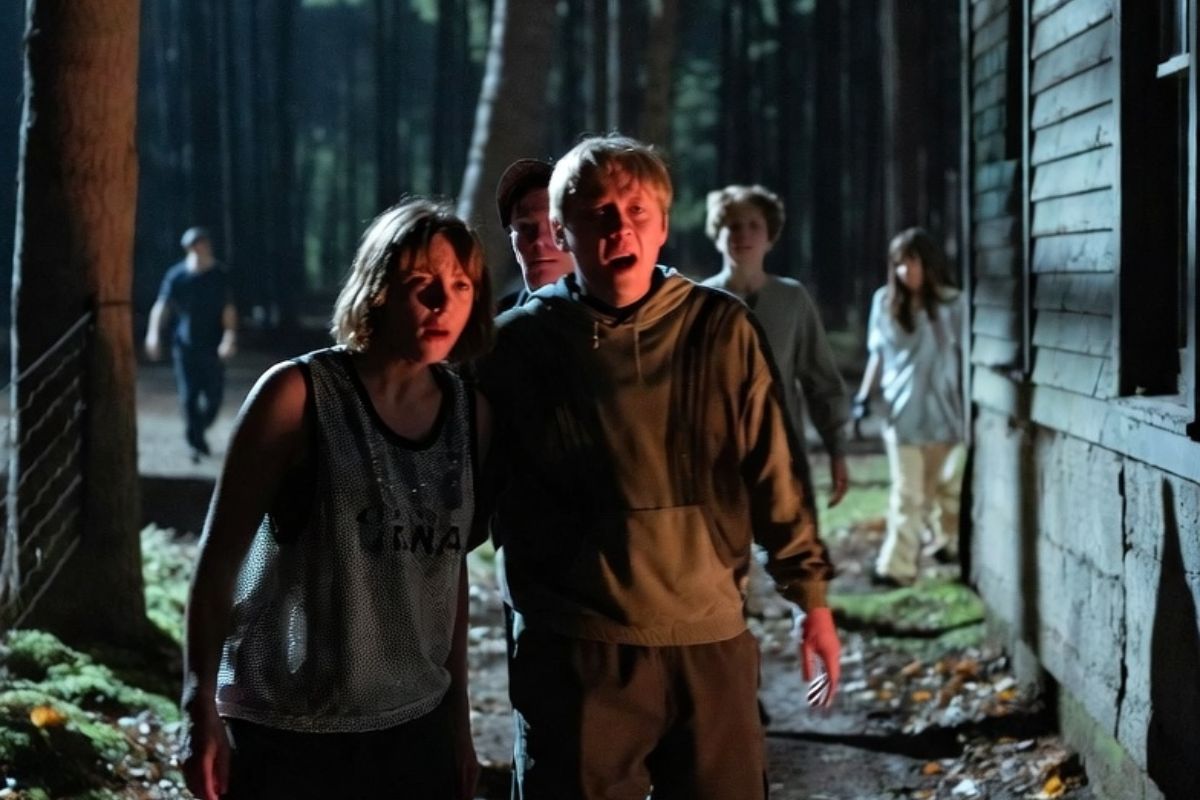
Kaamelott part 2 (part 1) was released in theaters on October 22, and with its original soundtrack composed and orchestrated by Alexandre Astier, faithful to his one-man band image.
France Musique: Director, editor and composer… How do you work with all these hats? Does the music directly influence the editing of the film, and vice versa?
Alexandre Astier: I believe that the great privilege of editing and making music is being able to not choose. The normal cycle is that the film exists, the editing exists, often it no longer moves, and then the composers have to start editing, sometimes with a lot of obligation on the tempi, on the measures, and then you have to stick to the music… I don’t work like that at all. I compose at the start of an edit, sometimes before, sometimes after, sometimes during. When we record with the Orchester national de Lyon, there are no images, there is just a tempo, you shouldn’t move too much from that tempo.
Afterwards I recover everything, it has moved sometimes with the expressiveness of the orchestra and the baton, but I can still move the montage, it is at home, so I readjust. This therefore allows the orchestra to record like a concert, and not like film music. And then when we receive the piece, mastered, orchestral, we say to ourselves: “Well, he’s the boss!”. But it’s very nice that it’s the boss, because an orchestra is someone who has the floor, it’s someone who knows how to speak. I don’t mind that the music is the master of the rhythm in these scenes.
France Musique: You also composed the music for KV1, what changes in the musical atmosphere of this new opus?
Alexandre Astier: I think that the KV2 album is more “scary”, it has a more “frightening” atmosphere, because what is happening on the screen is a little more “frightening”. This is the episode where people go on adventures and they freak out. So you have to freak everyone out, including the public. In music, I use dissonances, bass instruments and especially overlapping tones. You install a nice C minor, it goes well, then bam! You put something in C sharp minor on it. It’s nagging, it’s distressing.
France Musique: And precisely, if KV2 is an adventure film, how do you put the epic music to music, what are the ingredients of good epic music?
Alexandre Astier: Good adventure music is music that contains hope, that contains harmonic openings, and then it is often music that contains decibels. You have to send a little gas from time to time, with a strong brass section, a nice horn section. I’m not inventing anything, it’s good to have a few horns… Horns, they can do everything: they can be at the bottom, in the middle, at the top, they’re everywhere. It can be very melodious, it can be very gentle and then suddenly it’s very aggressive, suddenly they put their fist in it and it becomes mysterious… It’s a bit like the magic desk (the others will yell at me, it doesn’t matter), in any case, it’s a privileged tool of the epic.
France Musique: And then the horns are also Kaamelott’s flagship instruments. The three very identifiable notes that called the viewer to the Kaamelott series were played by horns…
Alexandre Astier: Yes, it’s a horn section that does the calling at the beginning. In the film too, and it’s the horn section of the Lyon national orchestra now. At the time, it was 20 years ago, or even more, I think that this call was a way of calling people to a television schedule which is still a kind of prime time squabble. Between the weather, the sponsors, the start of the news, the thing where everyone crashes like that… And there was Kaamelott in the middle of all that. The horns were calling people home, at a time when they are washing their hands, making fries or whatever, it was an alarm.
France Musique: Do classical or film music composers particularly inspire you in composition?
Alexandre Astier: The things that fascinate me in classical music, like the music of Bach, are not necessarily immediately transferable on film. It’s difficult. This is not music that should be combined with dialogue or a situational scene. But I did, I did a tonal counterpoint, but rather in a clipped scene. I think the inspirations for these kinds of compositions are things that come from composers who are perhaps a little more archetypal, on more spectacular colors. Russians for example: Prokofiev, Tchaikovsky… They are not necessarily people that I would listen to all the time, on the other hand, take a work, open the cover and look at how they did it: what have they allowed themselves harmonically? Where did they go? These are things that are very useful in a film because it’s very direct, sensual, very immediate.
France Musique: In addition to composition and orchestration, you also play multiple instruments on the soundtrack (piano, mandola, tin whistle, hammered dulcimer…), was it important to play too?
Alexandre Astier: In fact, I go to a store in Lyon, at Pick & Bochevery time I make a film. It’s a kind of Ali Baba’s cave, with people who go looking for instruments all over the world and who explain to me, because I still have to know whether to blow into it, tap on it, throw it in the air… because I don’t know anything about it at all! These are instruments that I deviate to use in my own way, to have a texture from time to time that mixes with the orchestra. On the other hand, I have to check the chords, the tones, it’s not always easy. I say to myself: “Ah it could be the instrument of something, it could go with this place…”. It also helps the viewer to enter a situation more quickly, to recognize it. And it’s all at home, so I bring back a whole bunch of stuff, the car is full of things, the names of which I have forgotten, they wrote them down for me, and then I try to get something out of them.
France Musique: You can give us an example, which instrument inspires which theme?
Alexandre Astier: There is the theme of bounty hunters, when something happens to the bounty hunters, like in the film, they are attacked, the music of danger or terror in this scene is taken from the theme of the bounty hunters. So what was presented in a somewhat epic way for their departure and reused in a slightly more thrilling way, with different instruments. For example, their bass is played by an Indian tanpura. It’s a big instrument, with a lot of bass, and you can curl the strings as you want, with little wires between the bridge and the string. When we take them off, we have a very pure sound, when we put them on, we have a grain which is a little bit distressing, that amused me a lot. It’s my son Ethan who plays it, he doesn’t know how to play it any more than me, but I told him: “If you get yelled at by the tanpura players, I’ll say it’s you!”. That’s what having children is for.
France Musique: Do you ultimately find similarities between composing music and directing a film?
Alexandre Astier: Director, author, all these are professions where we communicate, where we must inspire, infuse from time to time, correct, guide. There is the optics, the sound, the placement, the response… It’s by speaking, it’s by formulating, it’s by working together. Music does without all that. Composition and orchestration are things that need no formulation. I feel very good in the musical profession, because precisely, I no longer say anything.
To view this content, accept cookies.
To view this Youtube content, you must accept cookies Advertisement.
These cookies allow our partners to offer you personalized advertising and content based on your browsing, your profile and your interests.
To listen: Band original from the film “Kaamelott – Second Volet (part 1)” composed and orchestrated by Alexandre Astier and recorded by the Orchester National de Lyon. (Deutsche Grammophon)

Hi! I’m Renato Lopes, an electric vehicle enthusiast and the creator of this blog dedicated to the future of clean, smart, and sustainable mobility. My mission is to share accurate information, honest reviews, and practical tips about electric cars—from new EV releases and battery innovations to charging solutions and green driving habits. Whether you’re an EV owner, a curious reader, or someone planning to make the switch, this space was made for you.


Post Comment